Once Upon a Time in Cuba

My Adventure from 1996 to 2007
In 1996, a friend and I were planning a trip to the Caribbean. Our original destination was Cabarete in the Dominican Republic, one of the world’s famous windsurfing spots. Unfortunately, by the time we were ready to go, there were no available places left, so we had to look for an alternative.
That alternative was Cuba.
I remember thinking: “Are we completely crazy? We just escaped the grip of communism, and now we are voluntarily going back to spend our holiday in a communist country?”
But when we arrived, I quickly realized that Cuba was something completely different from what I had imagined. It was a unique Caribbean cocktail – a mix of perfect climate, cheerful and warm-hearted locals, salsa, rum, cigars, and a slowly dissolving version of communism.
At that exact moment, Cuba was beginning to open its doors to foreign involvement in tourism. The rules were complicated – foreigners could participate, but only together with Cuban state companies. Still, something new was beginning.
Then I reached the beach. I literally stopped in my tracks.
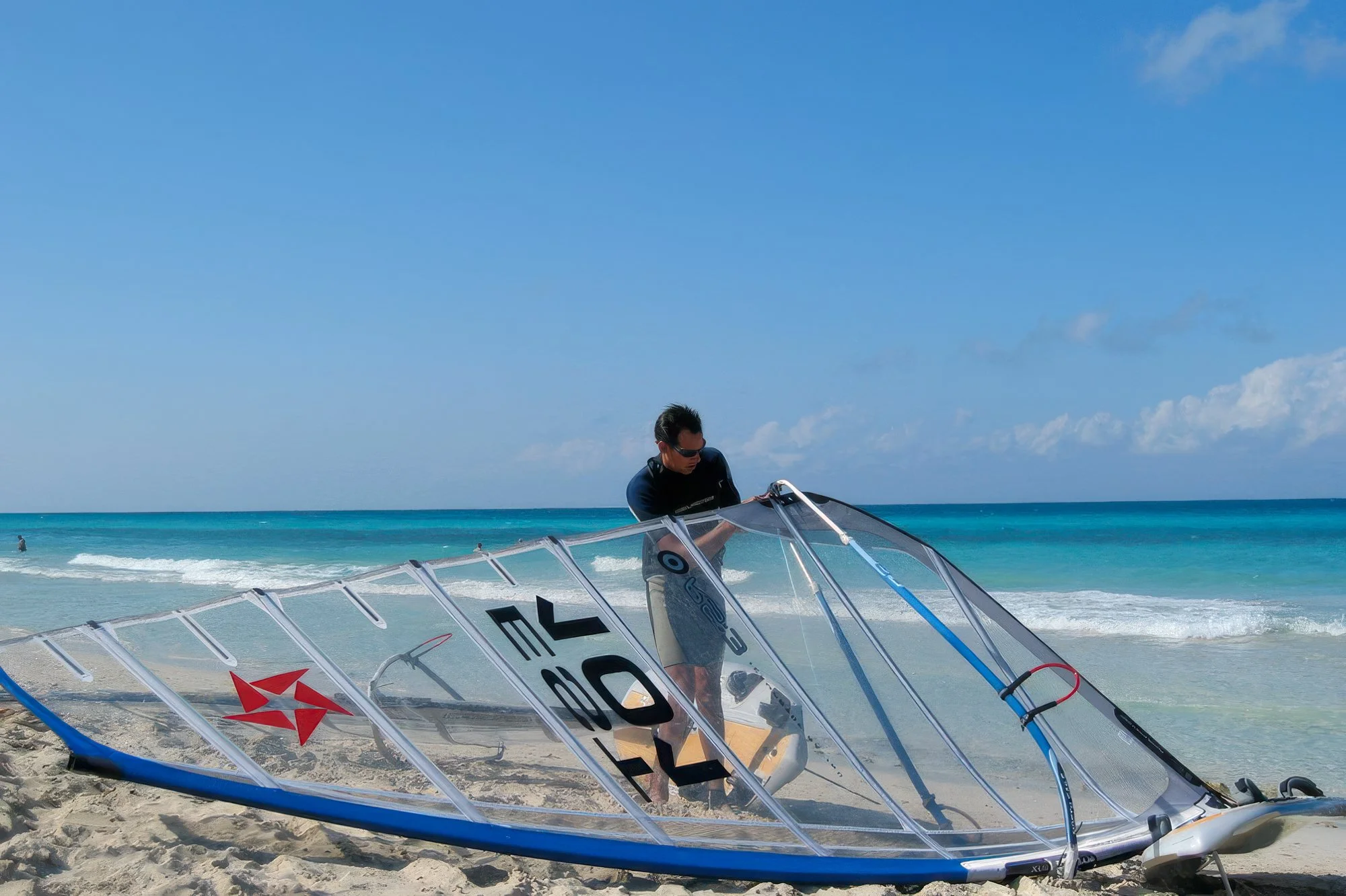
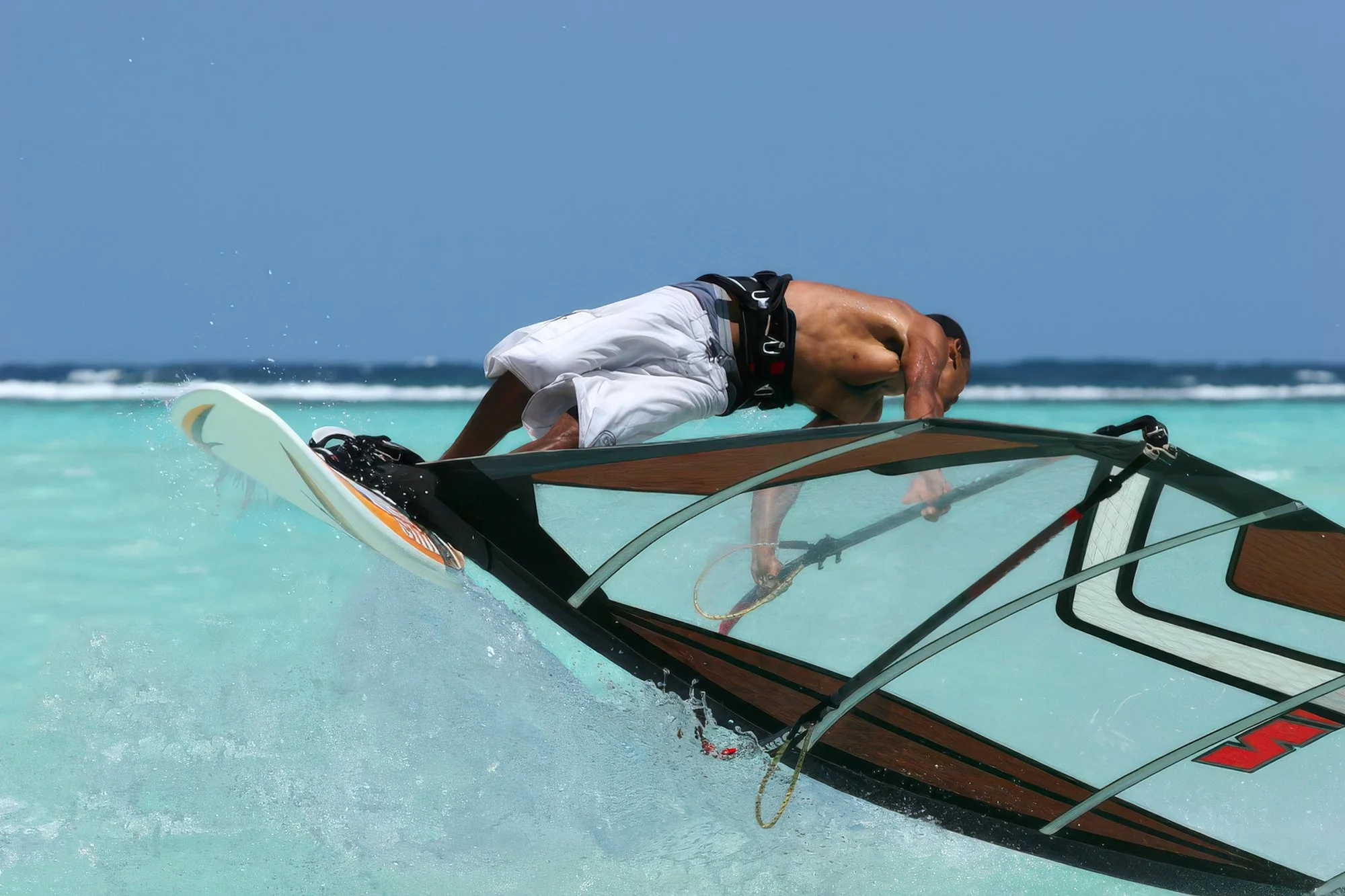
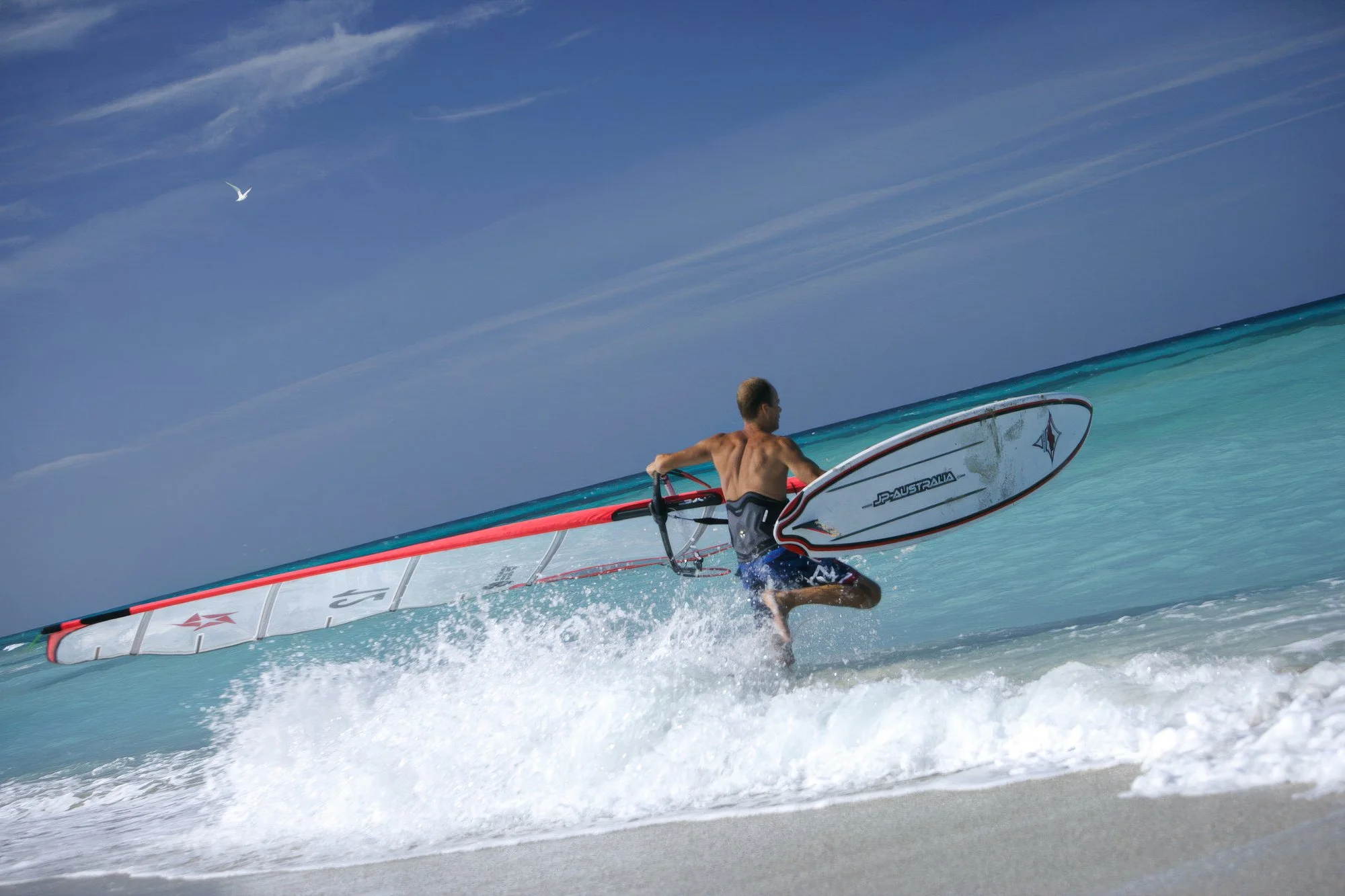
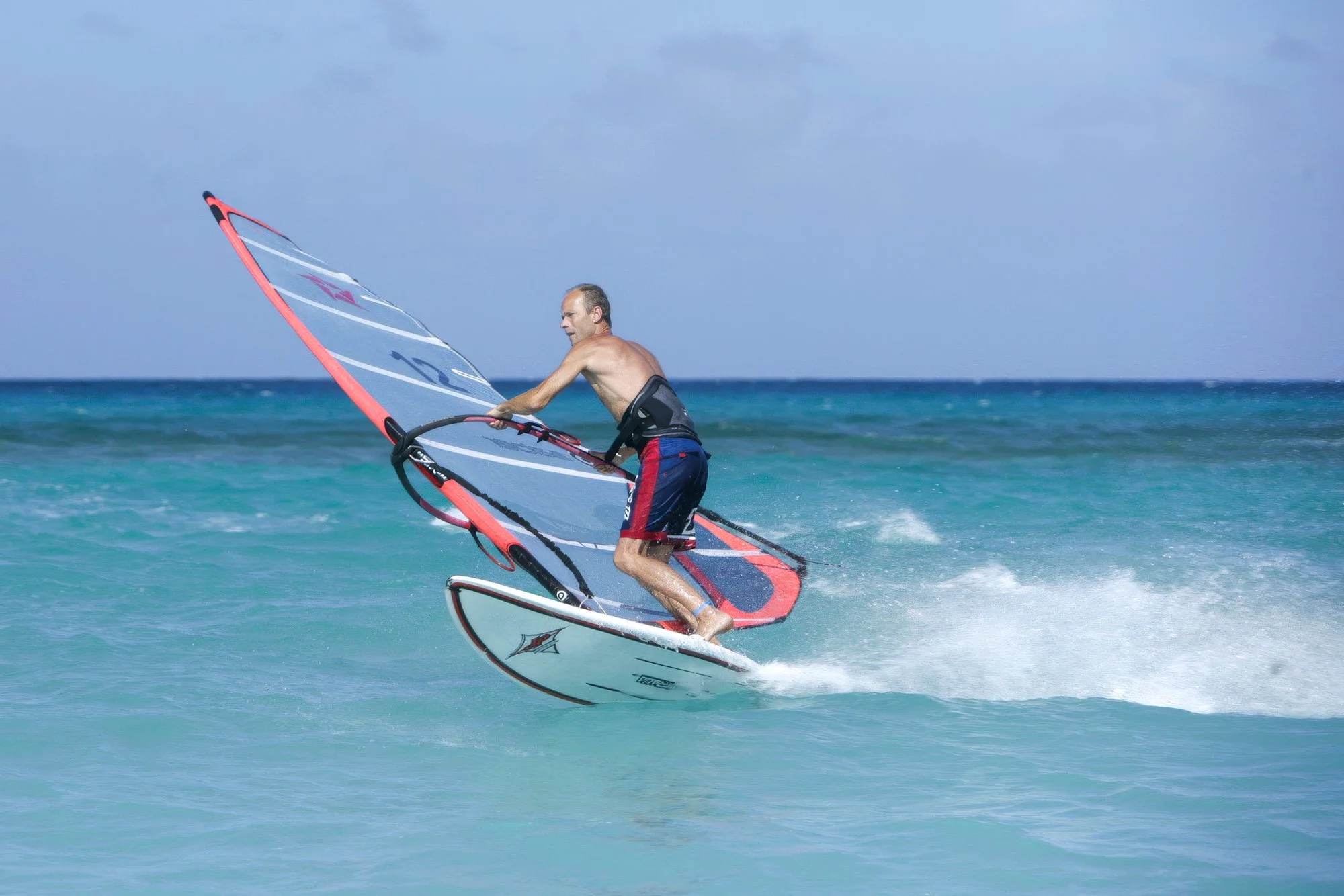
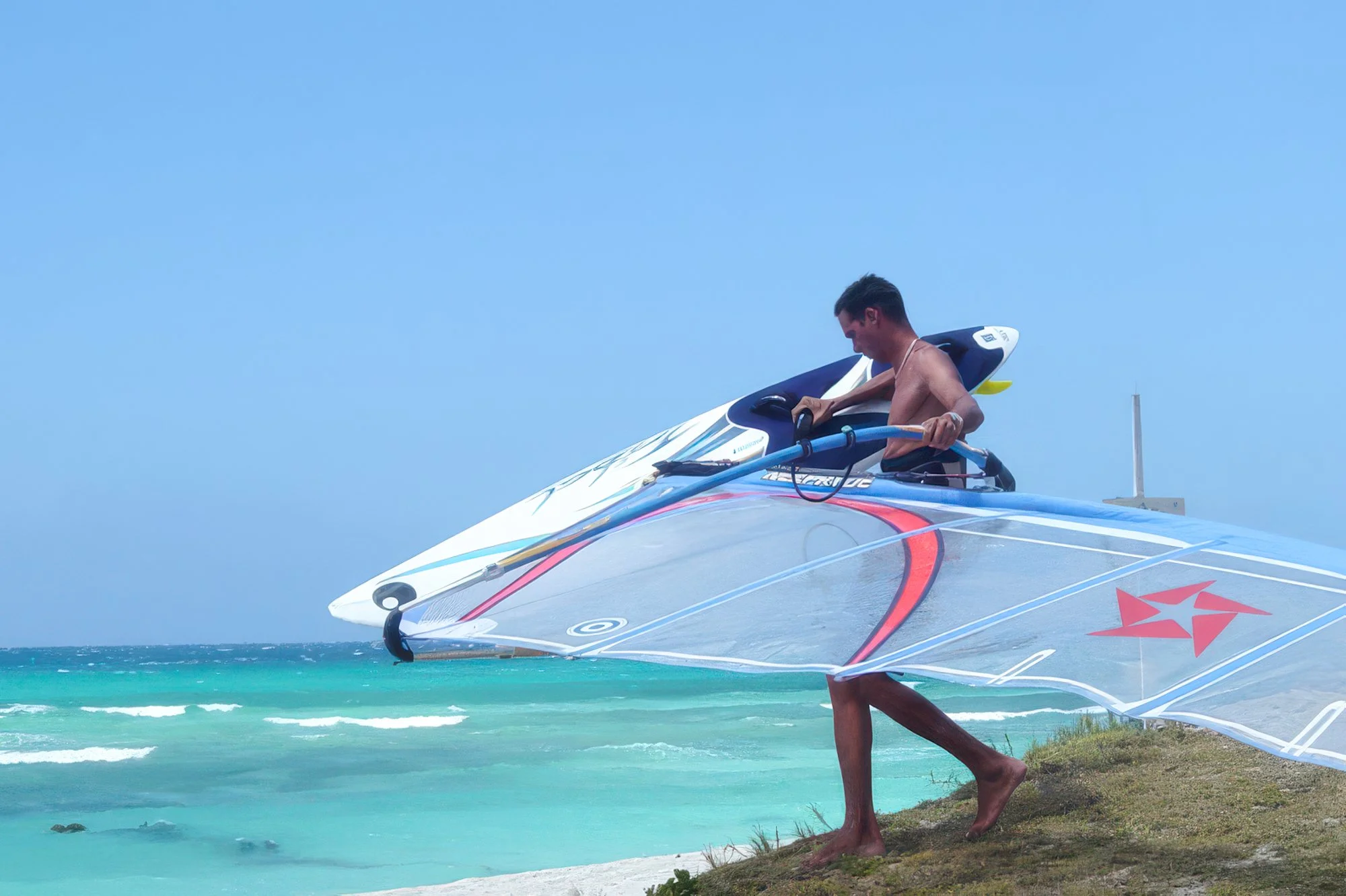
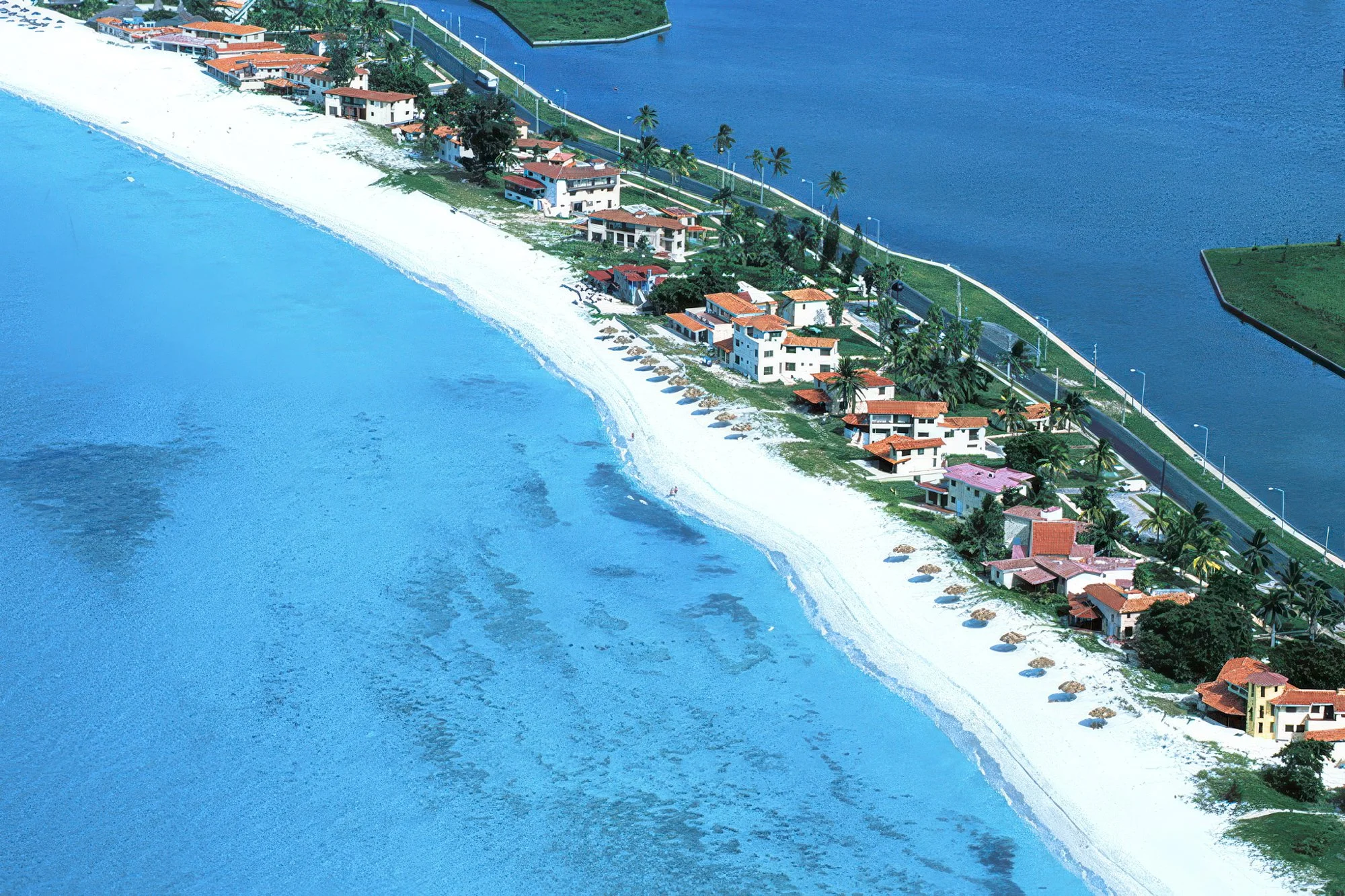
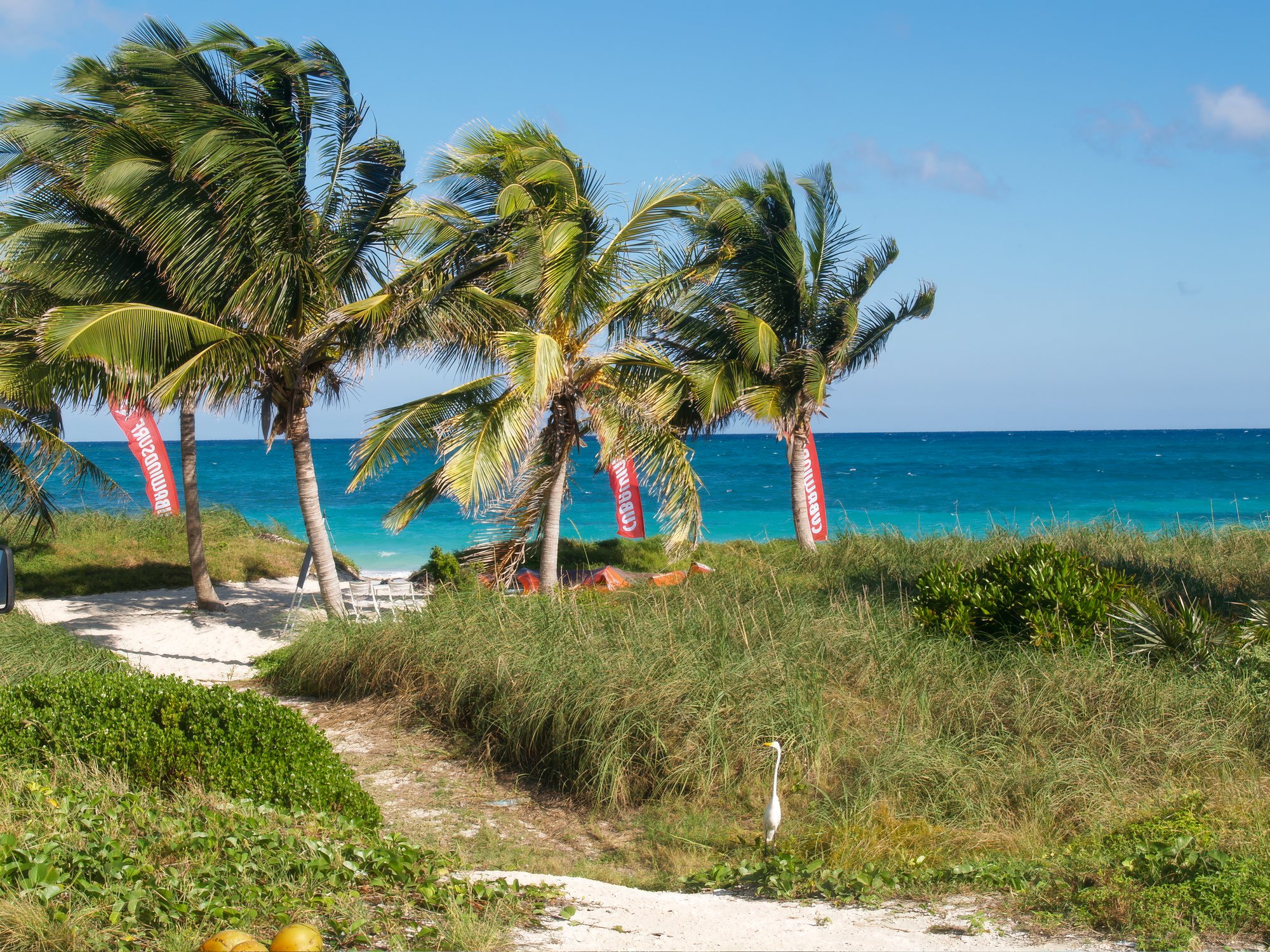
A never-ending coastline of white coral sand lined with palm trees. Crystal-clear turquoise water. A steady side shore wind of 8–12 m/s. Water temperature around +26°C and air temperature around +24°C — the normal winter conditions from December until the end of May.
For a windsurfer, it was paradise.
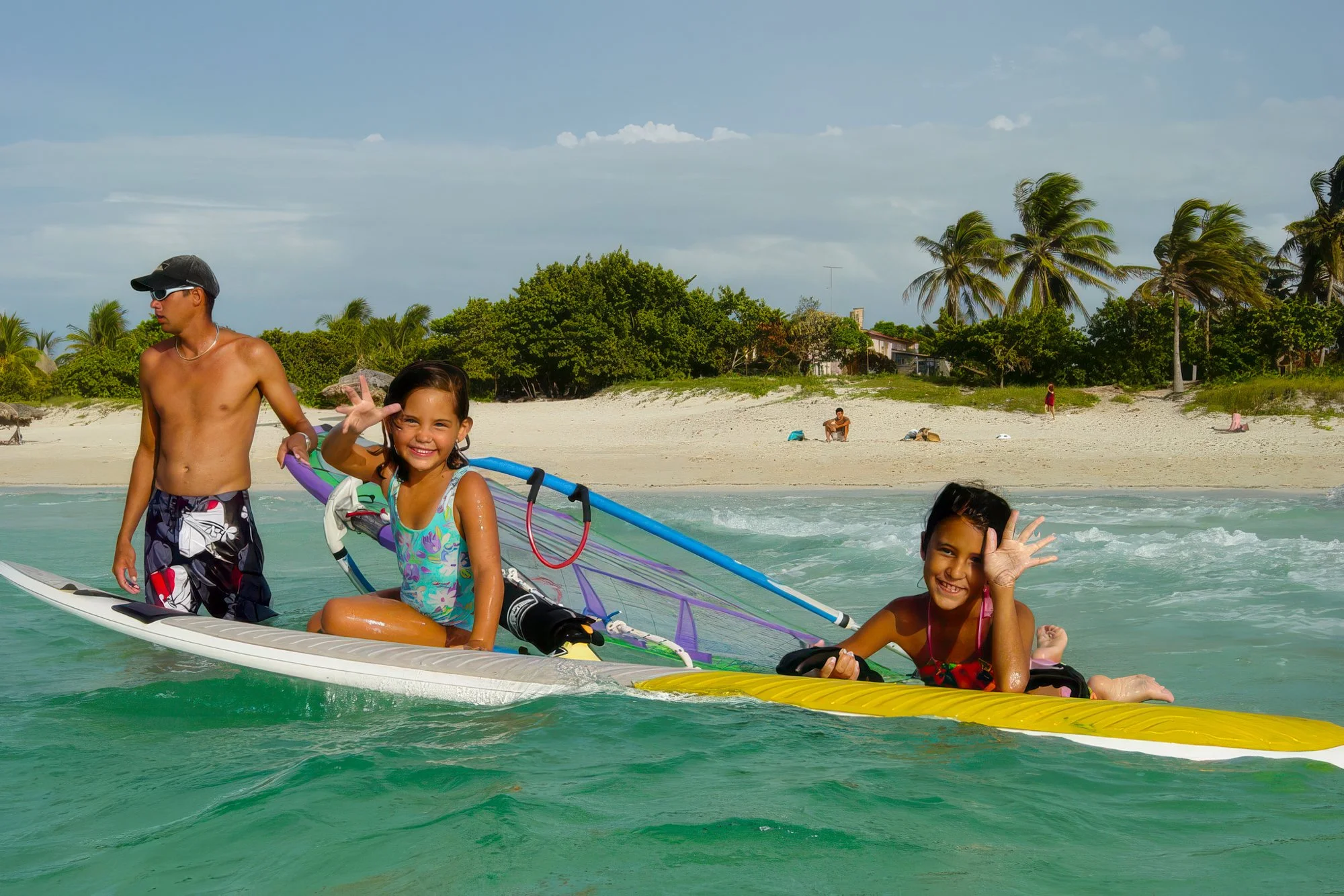
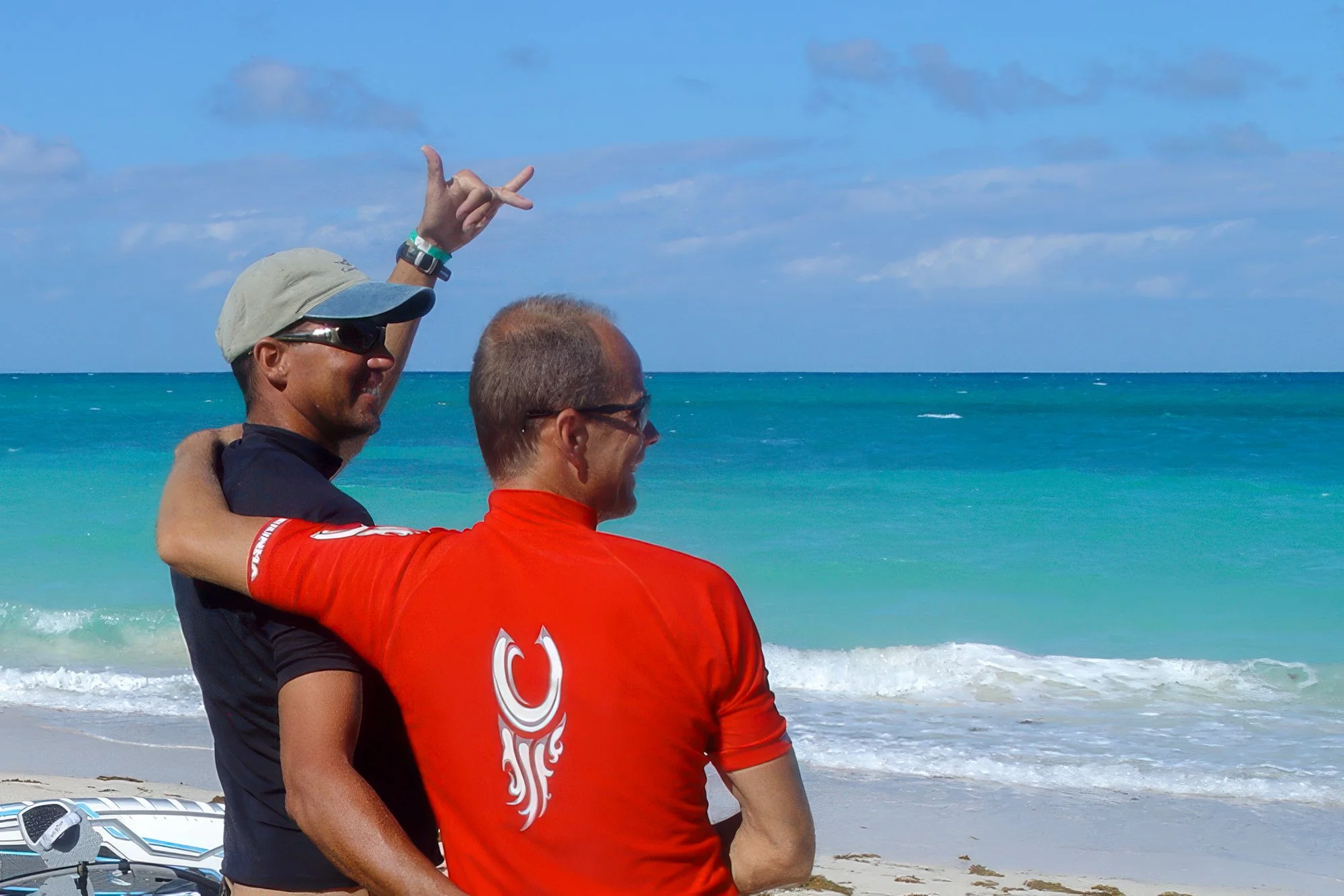
The only problem was that I had not brought my windsurfing equipment with me. I immediately started searching desperately through the entire 25-kilometre Varadero beach area, looking for somewhere to rent gear. There were plenty of water sports centres offering Hobie Cats, canoes, and other activities — but surprisingly, nobody rented windsurfing equipment. Finally, I found a local windsurfer named Elian Lopez. He was rigging some proper equipment on the beach. Elian worked at one of the water sports centres as a watersports equipment rental employee and diving instructor. When he discovered that we shared the same passion, we immediately connected. We became friends almost instantly. Luckily, Elian had managed to collect a few windsurfing rigs at the centre and was happy to share them with me.
That first trip was unforgettable. It was filled with countless wetsuit-free days on the water in Varadero, adventures around the island, Havana nightlife, and everything else that makes Cuba so special.
The Idea Begins
The following winter, after visiting Cabarete in the Dominican Republic, I realized something important: the windsurfing conditions in Cuba were actually much better.
The only missing piece was equipment. The thought started growing in my mind: “Why not create a proper windsurfing centre in Cuba?”
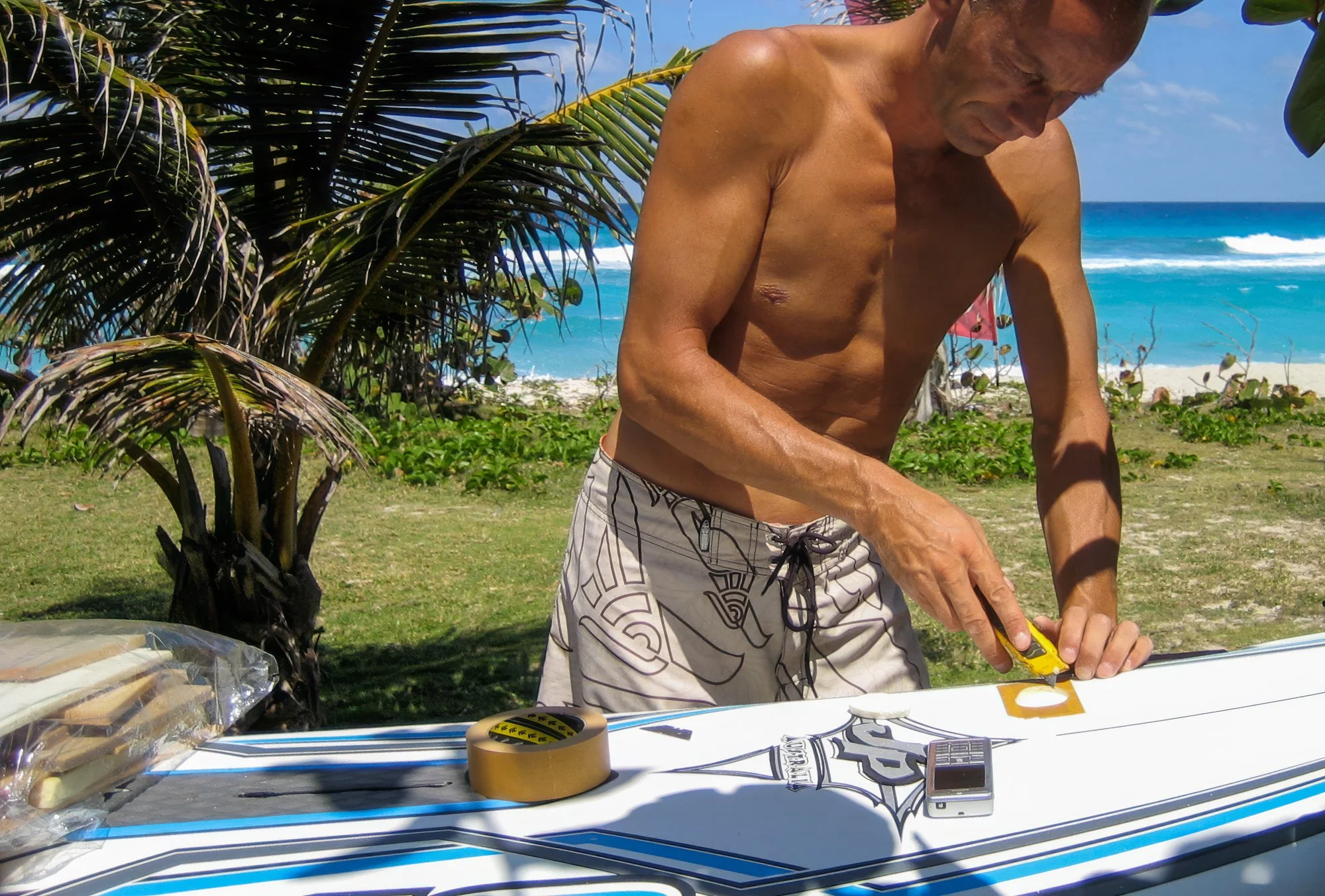
During my next trips, I began bringing used windsurfing equipment to Cuba. I shared it with local riders and slowly built a small community. Some locals even bought their own equipment, and little by little I kept bringing more gear.
Eventually, we decided: Let’s make this real.
We started investigating how a legal windsurfing centre could be established. The Cuban system was very different from normal business life. A foreign operator needed a Cuban state partner with the proper watersports licence – companies such as Gaviota or Marlin – and approval from the Ministry of Tourism.
Then we discovered the reality. Obtaining permissions, licences, and agreements with state companies was an incredibly complicated process. It was nothing like starting a normal private business. We struggled with the bureaucracy for years. Eventually, it became clear that reaching the finish line through the fully official route was almost impossible.
But Cuba always had another side. A more flexible, grey area. We discovered that there was another possibility: operate as a tourism agency bringing visitors to Cuba – for example, windsurfers – rather than openly running a separate equipment rental business. This approach was acceptable to many people and, most importantly, it worked.
Cubawindsurf Club – Bed and Surf
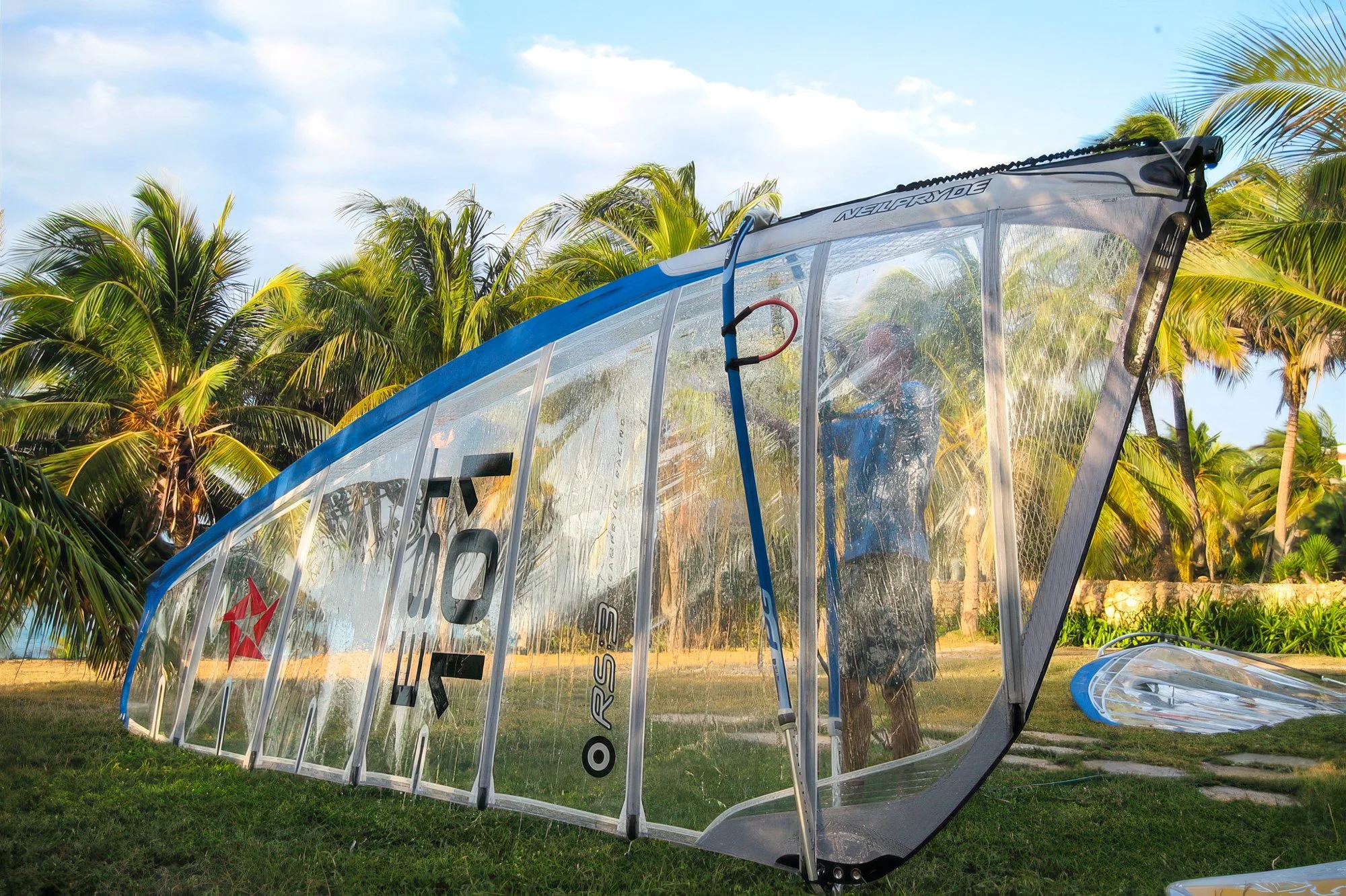
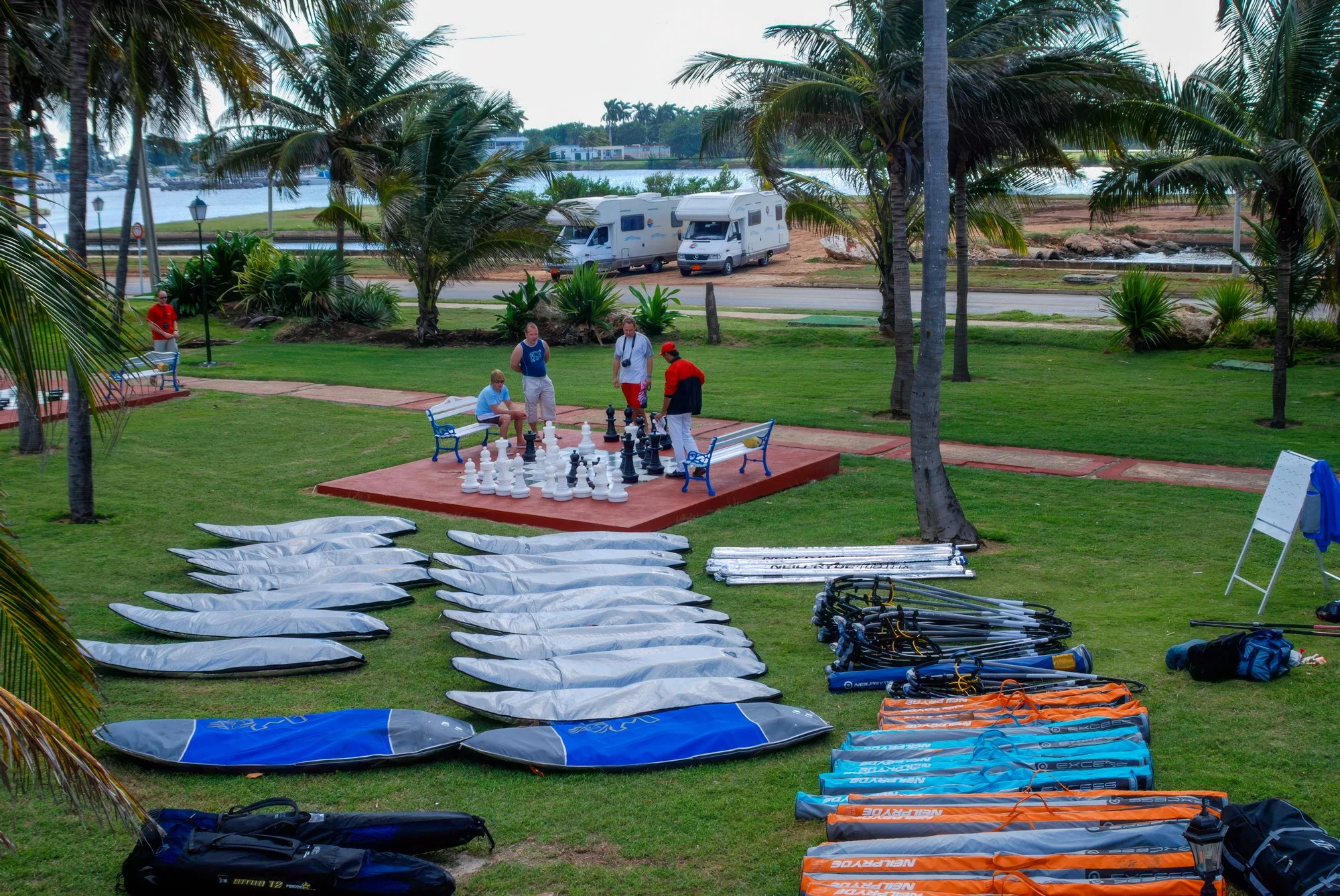
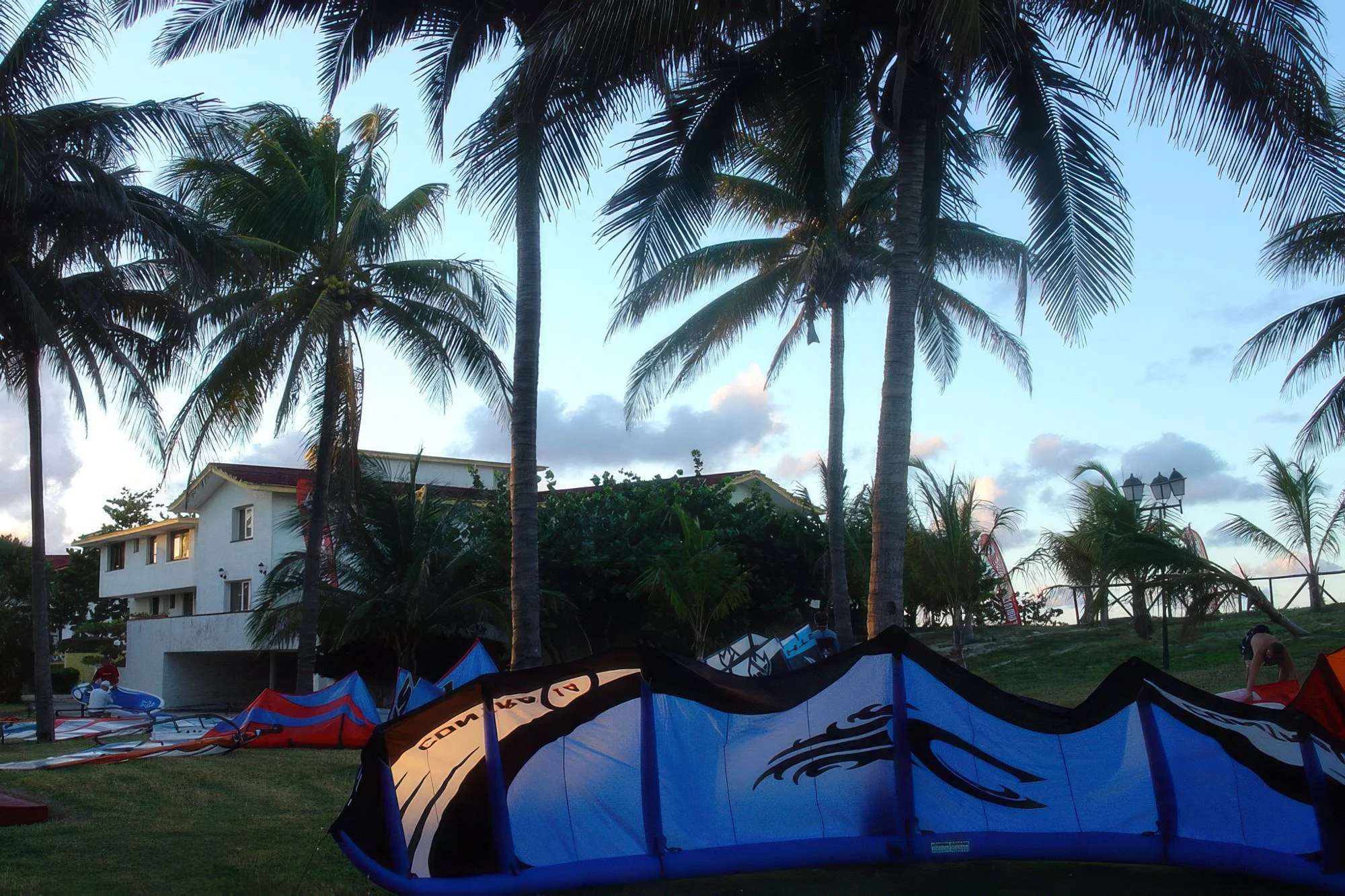
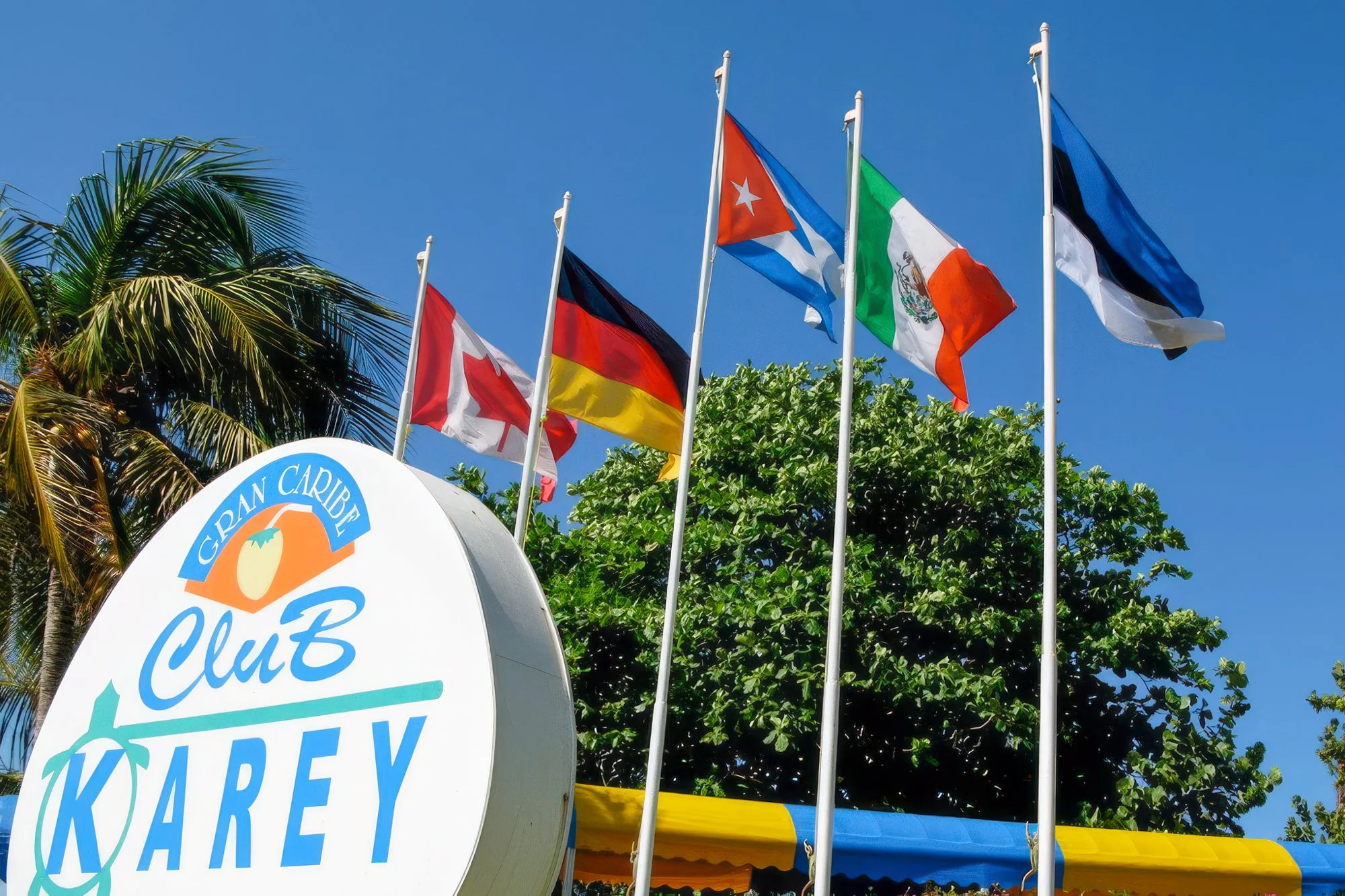
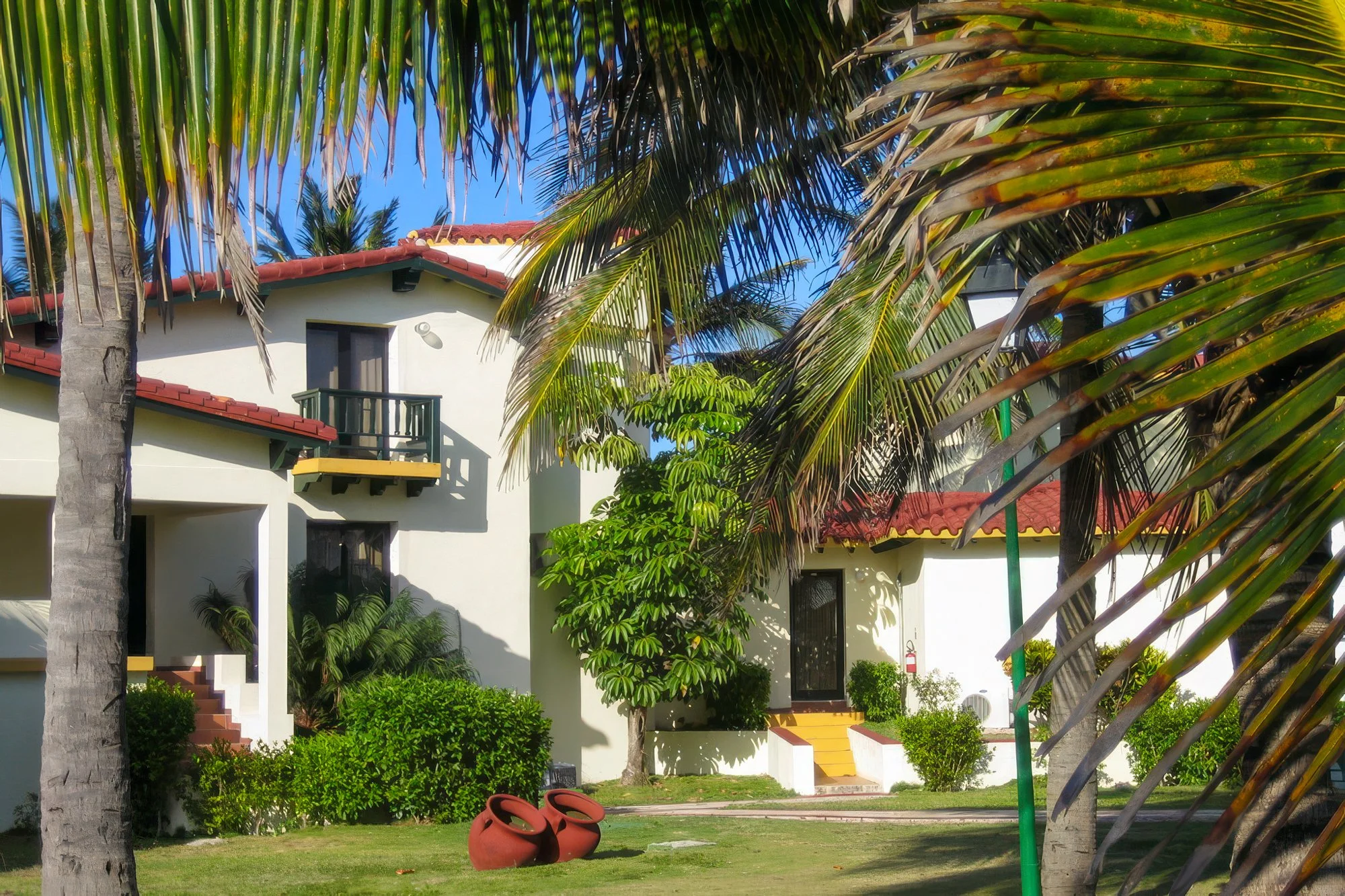
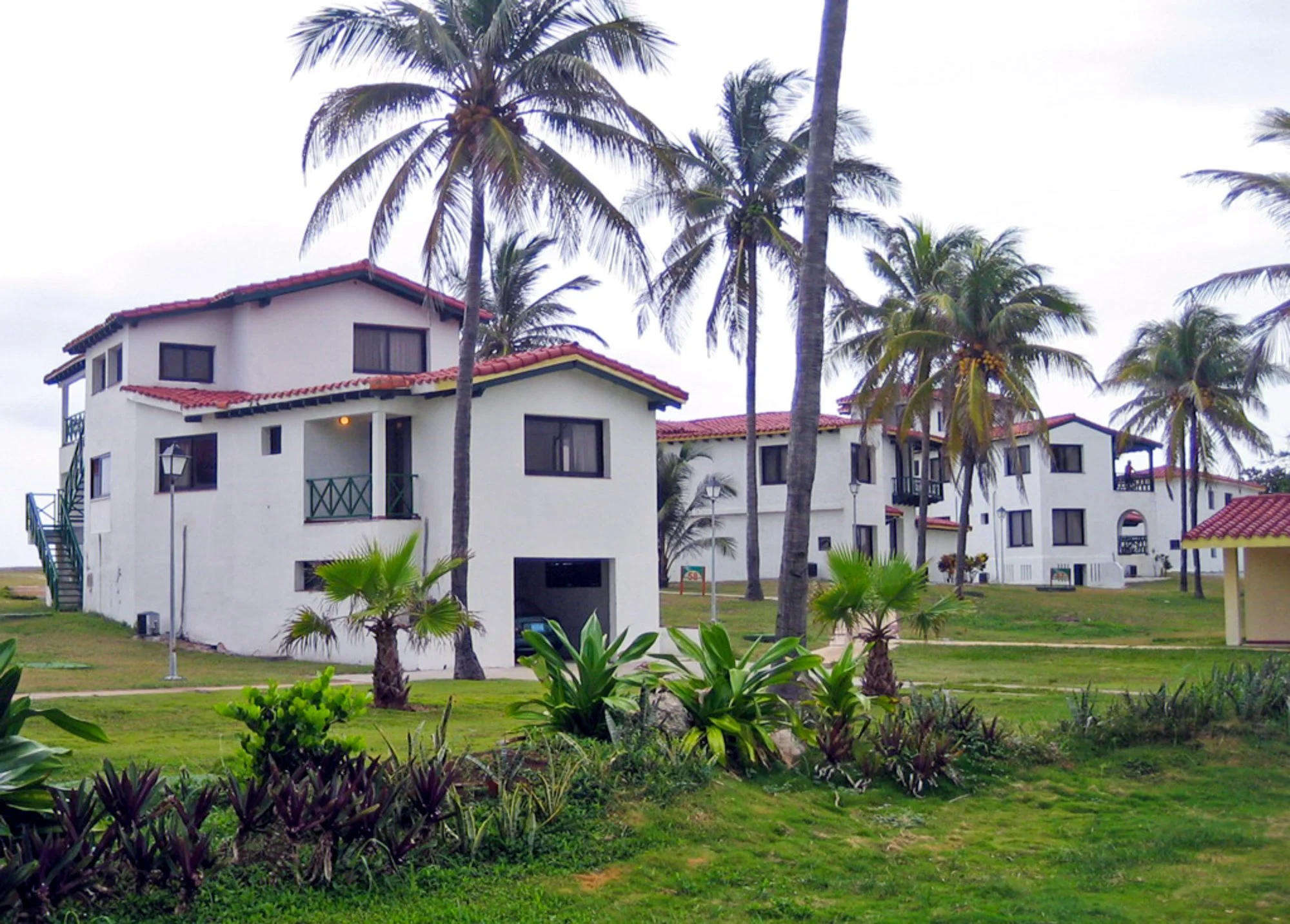
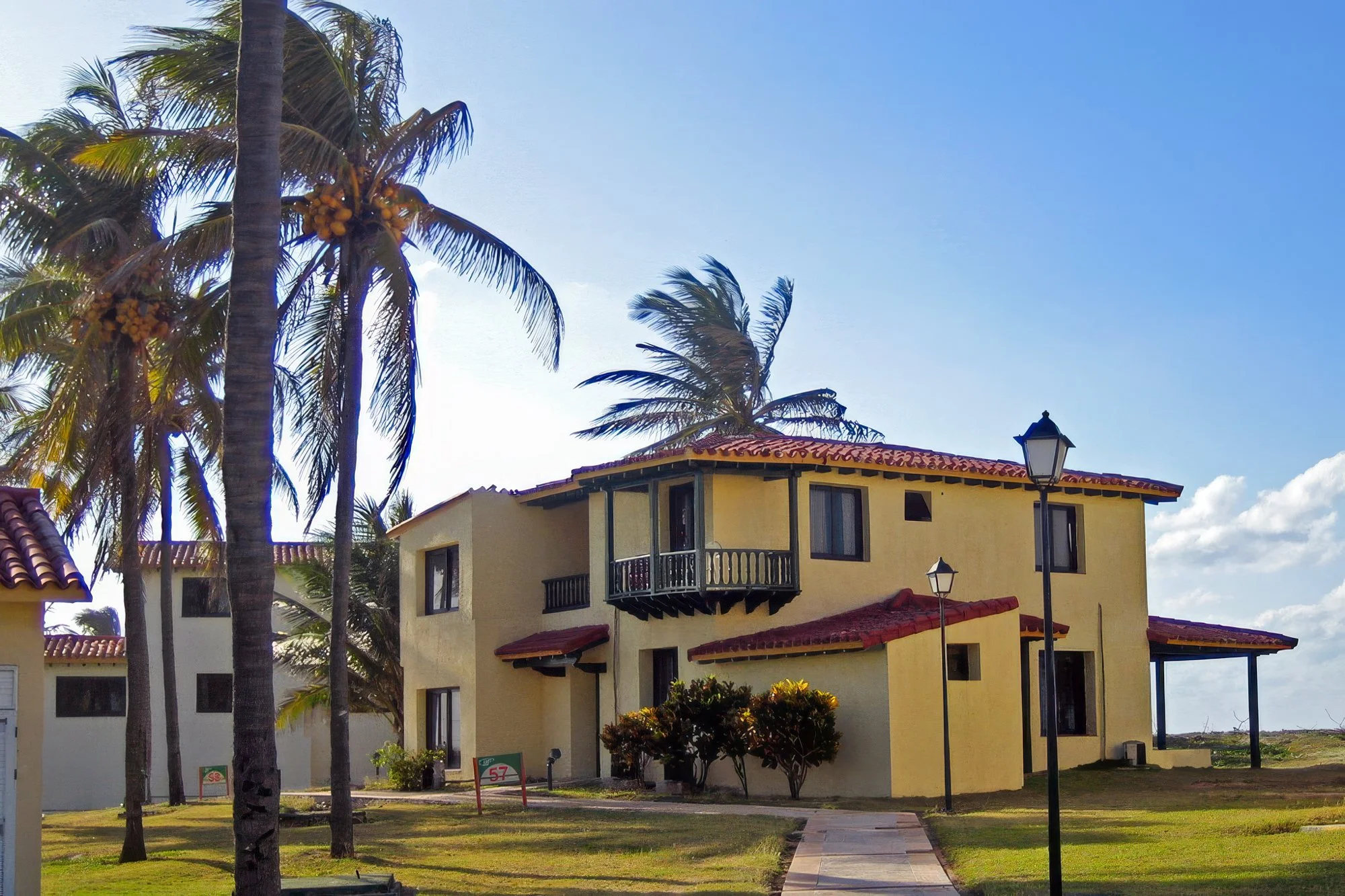
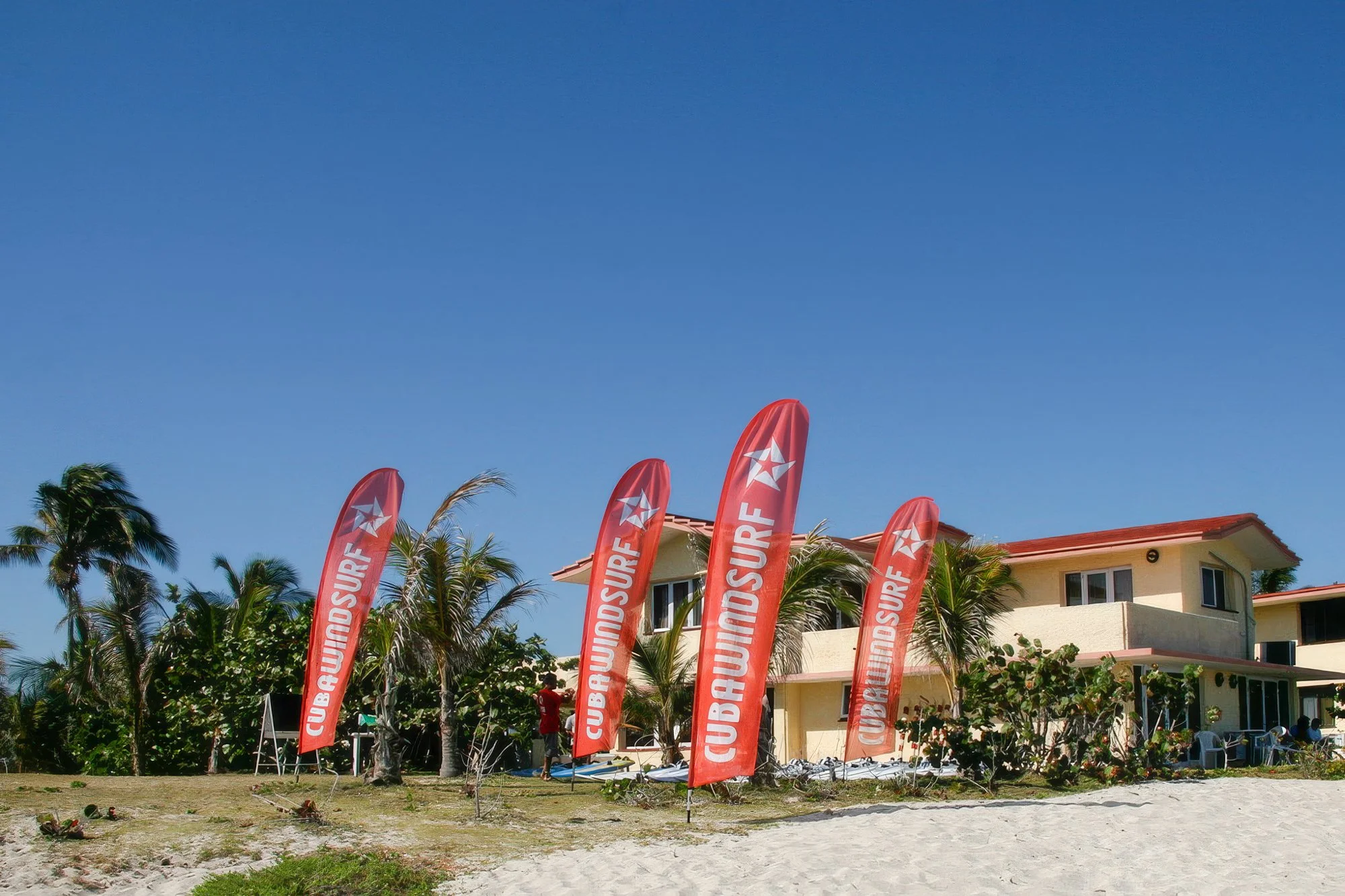
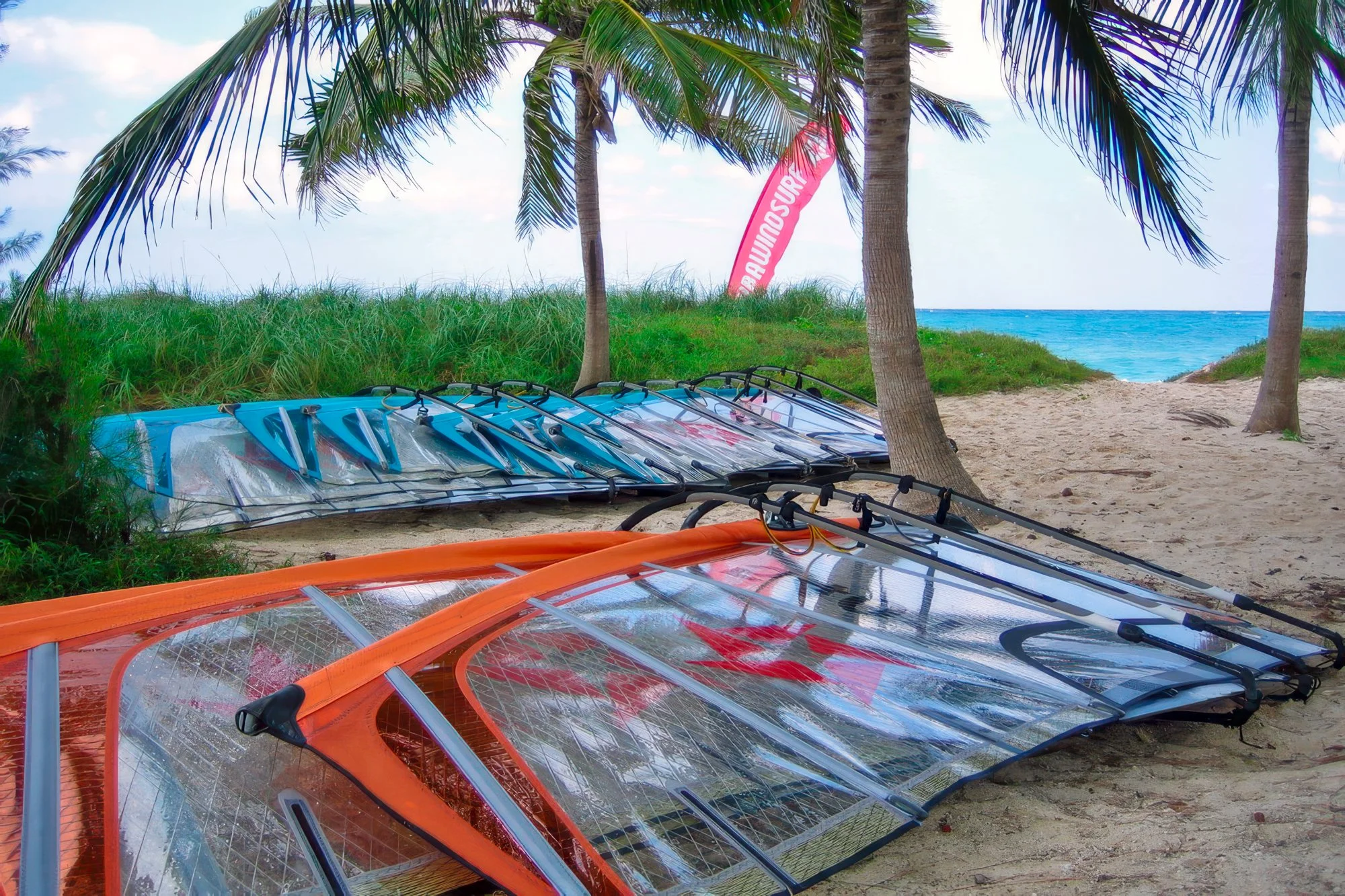
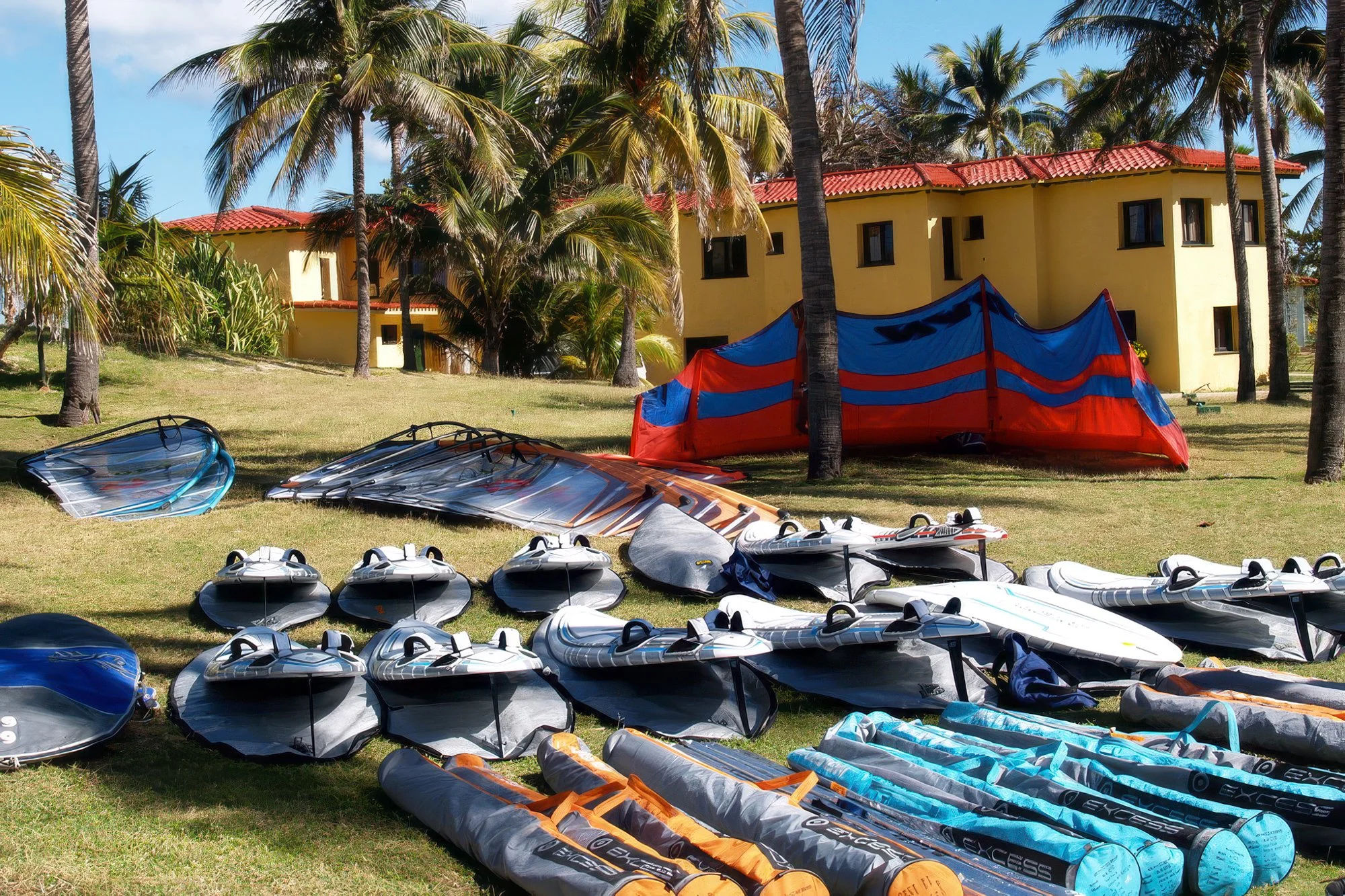
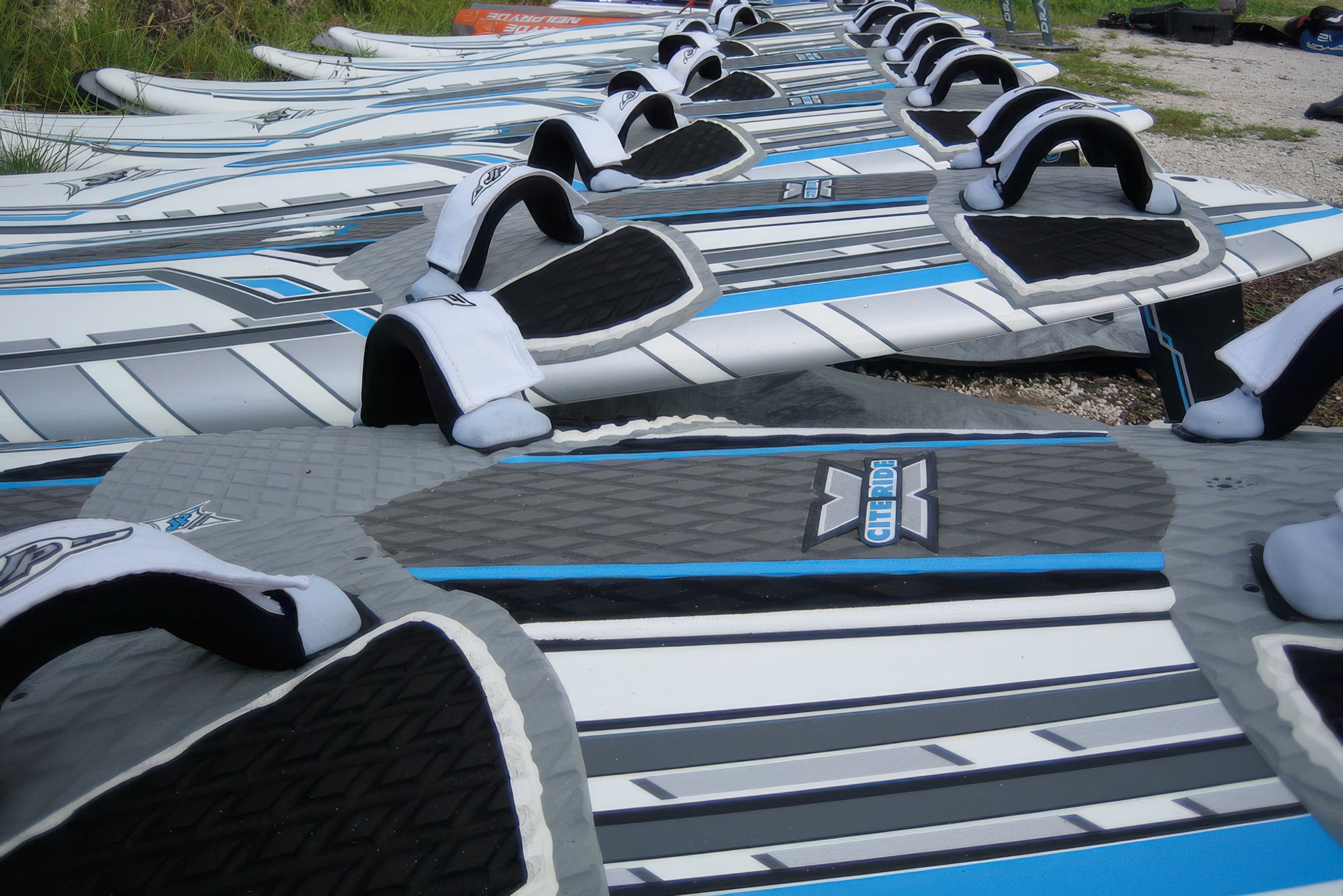
We partnered with the hotel company Gran Caribe, which rented us an entire six-room building inside the all-inclusive Club Karey hotel complex. It was a beautiful location: old Cuban-style villas located on a narrow western peninsula at the tip of Varadero. The building stood directly on the beach, with enough space to store equipment – including fully rigged sails ready for action.
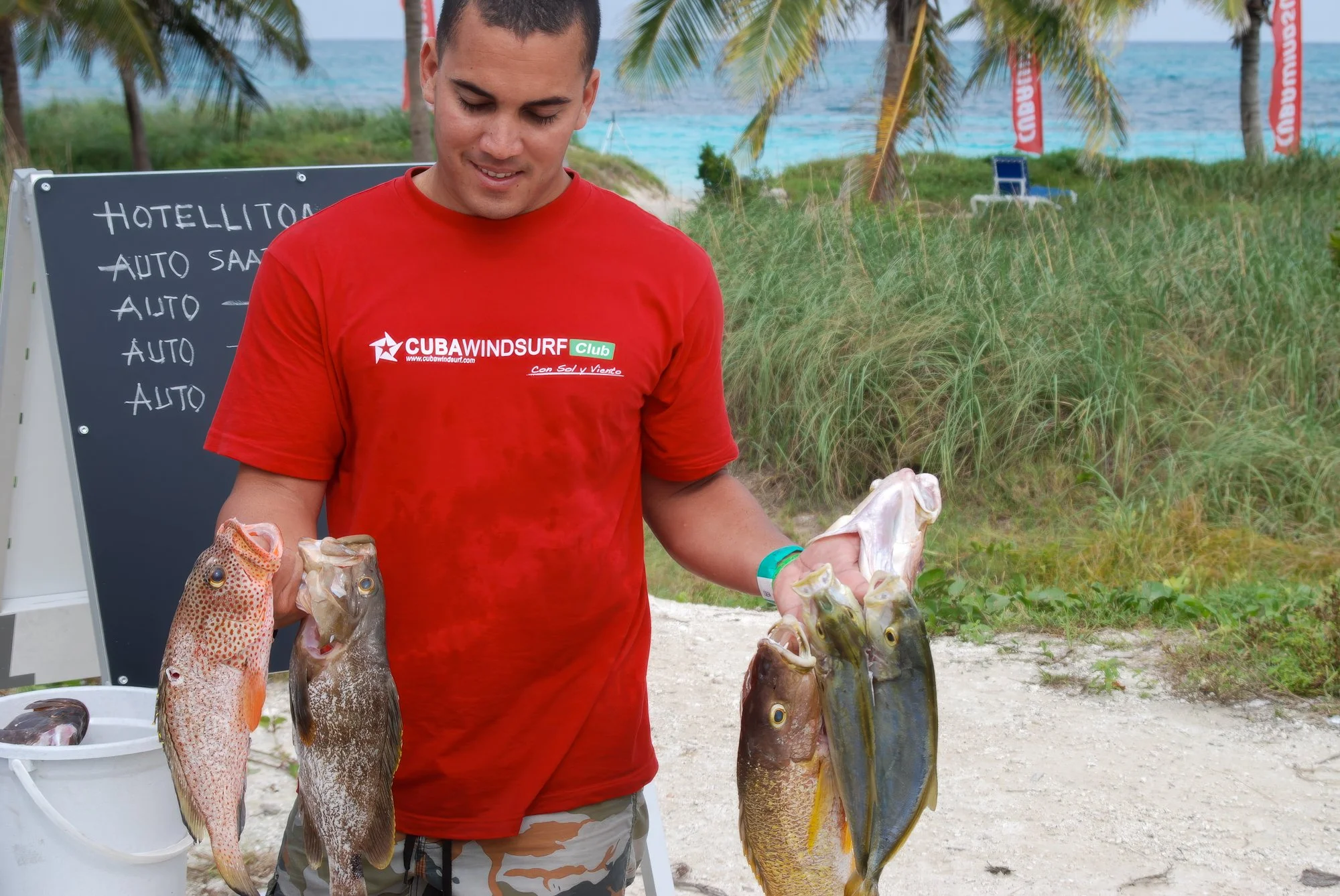
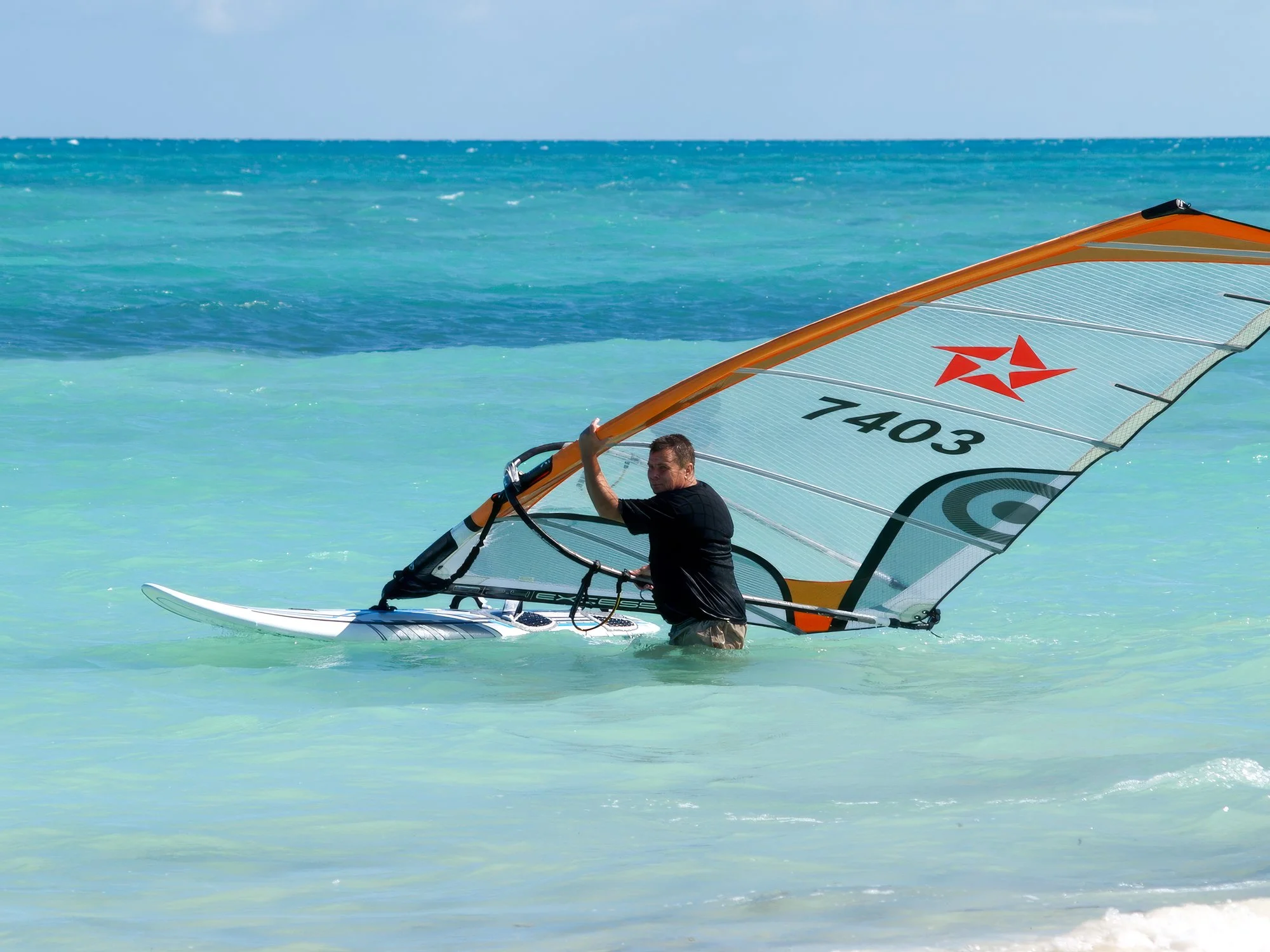
We created a concept called: “Bed and Surf.” Because we were not allowed to officially rent windsurfing equipment separately, we offered all-inclusive accommodation packages where windsurfing equipment was included as part of the experience. Our own building had only six rooms, so larger groups were accommodated in nearby buildings.
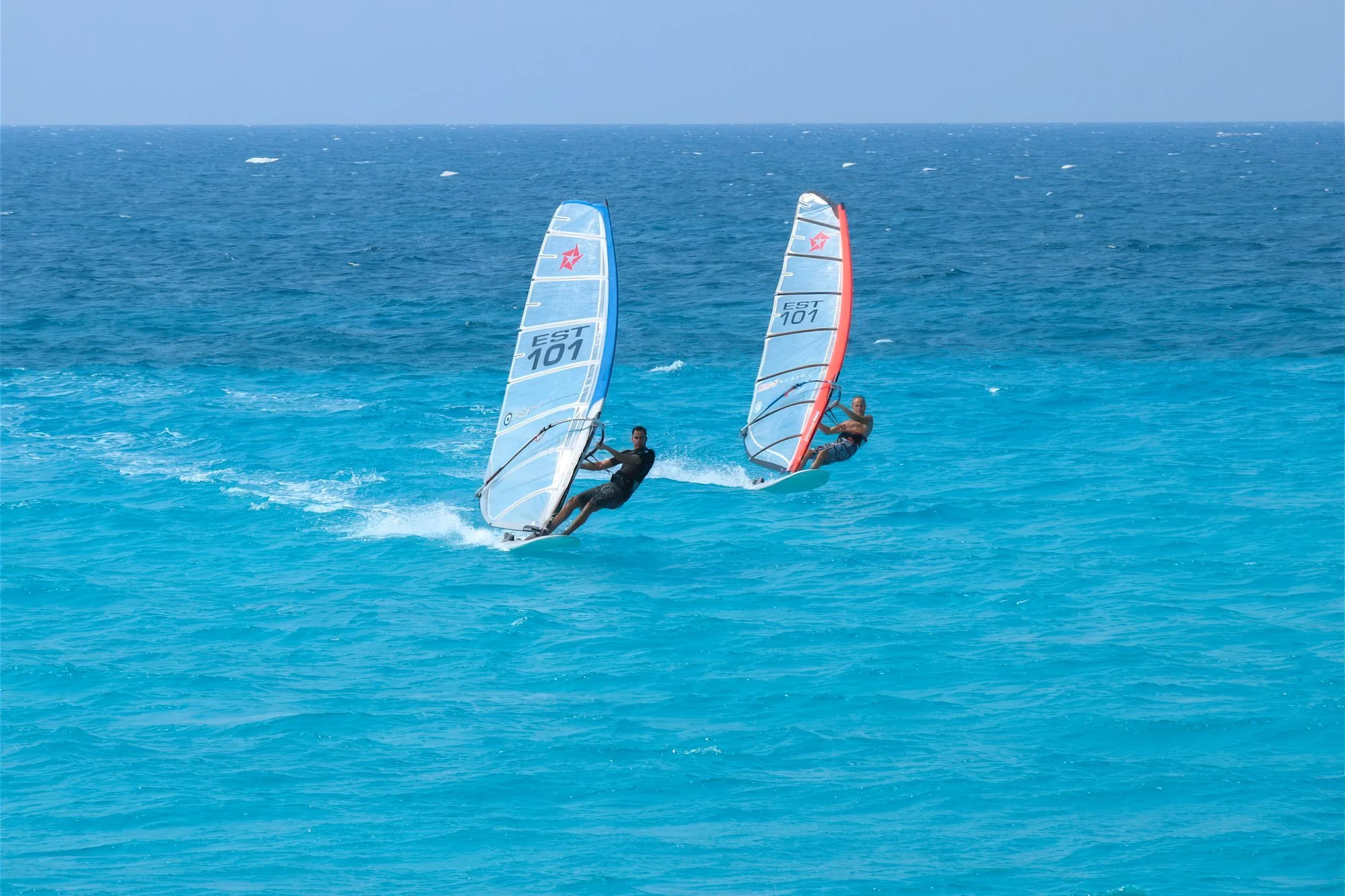
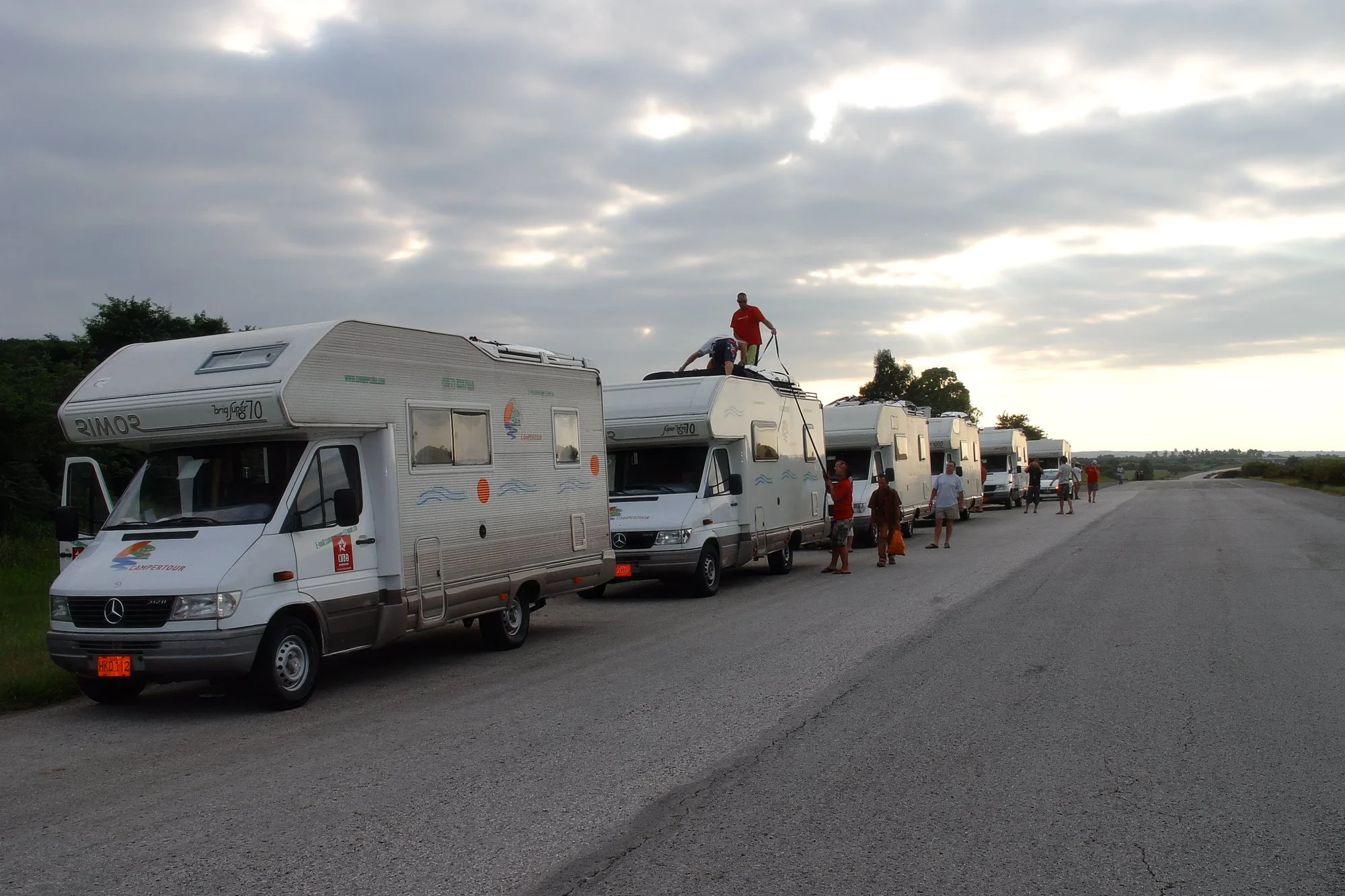
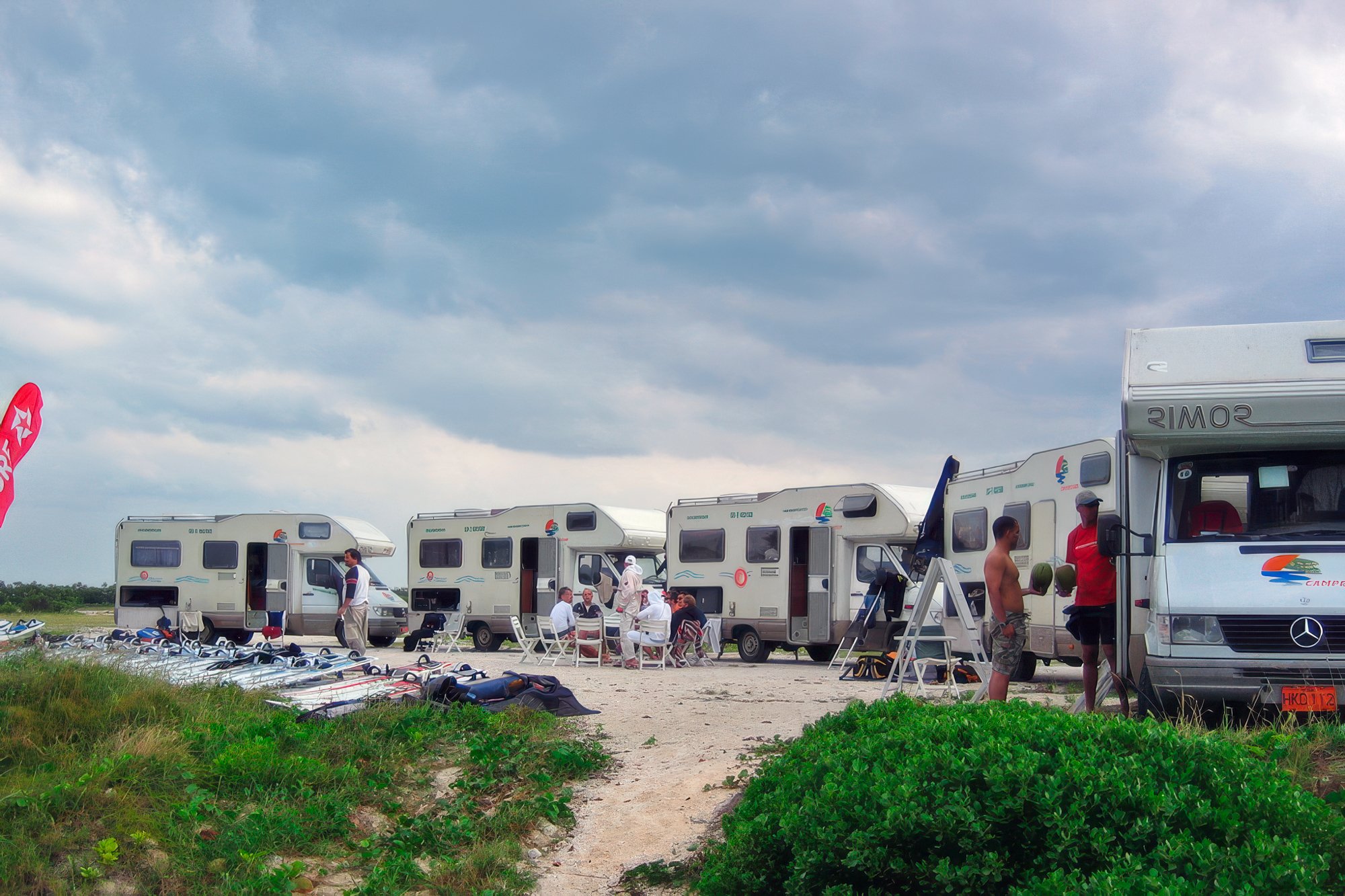
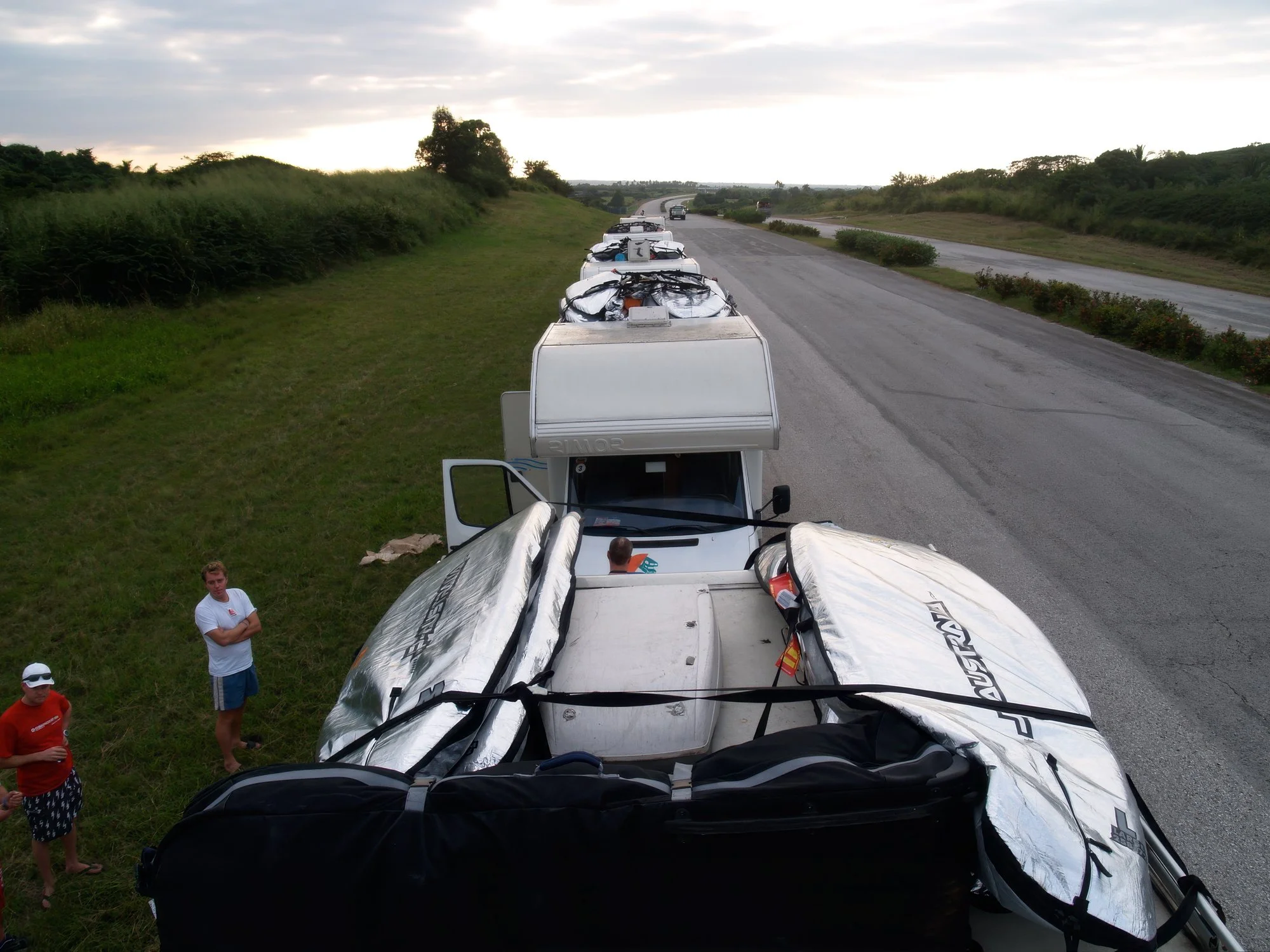
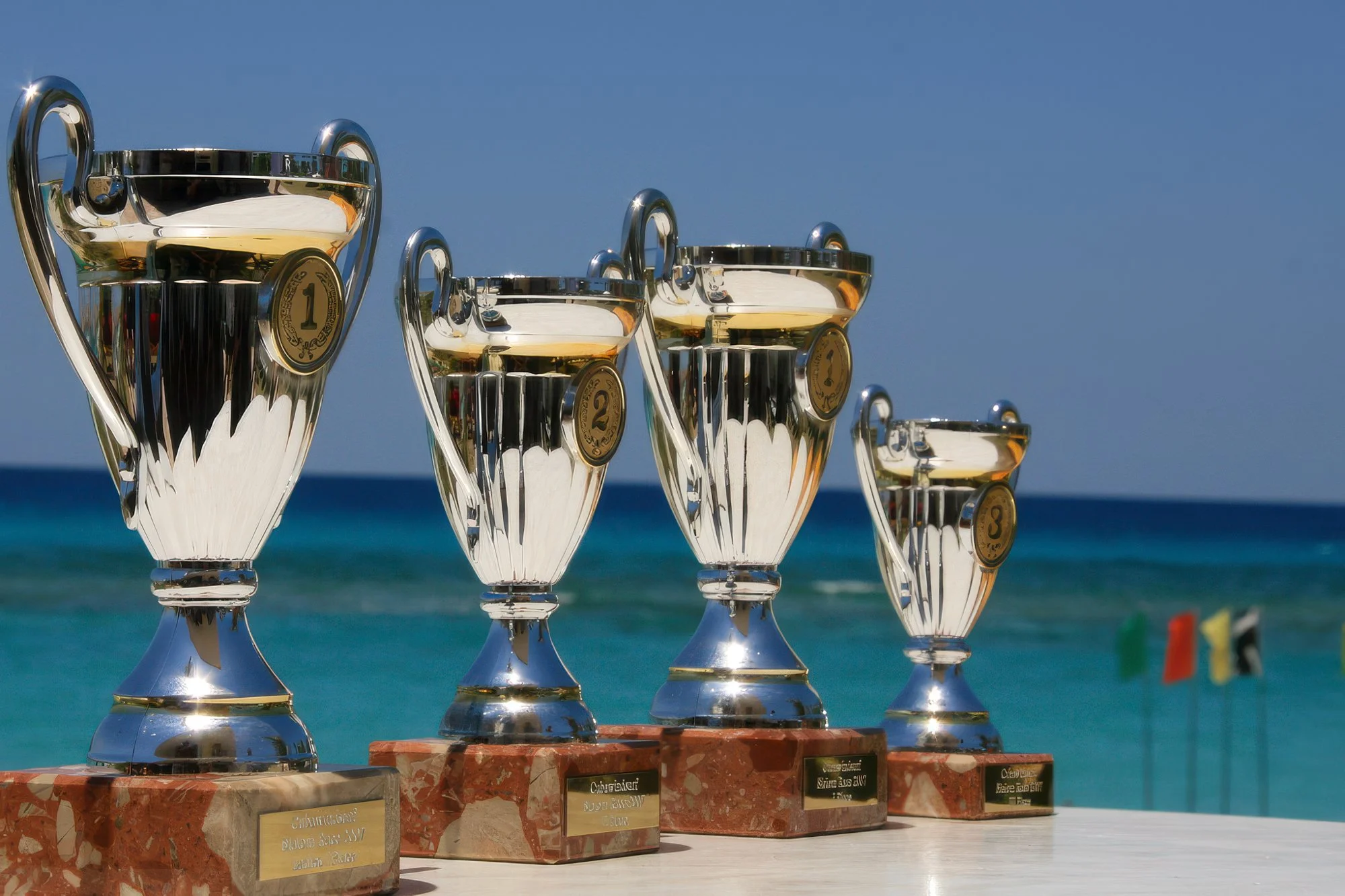
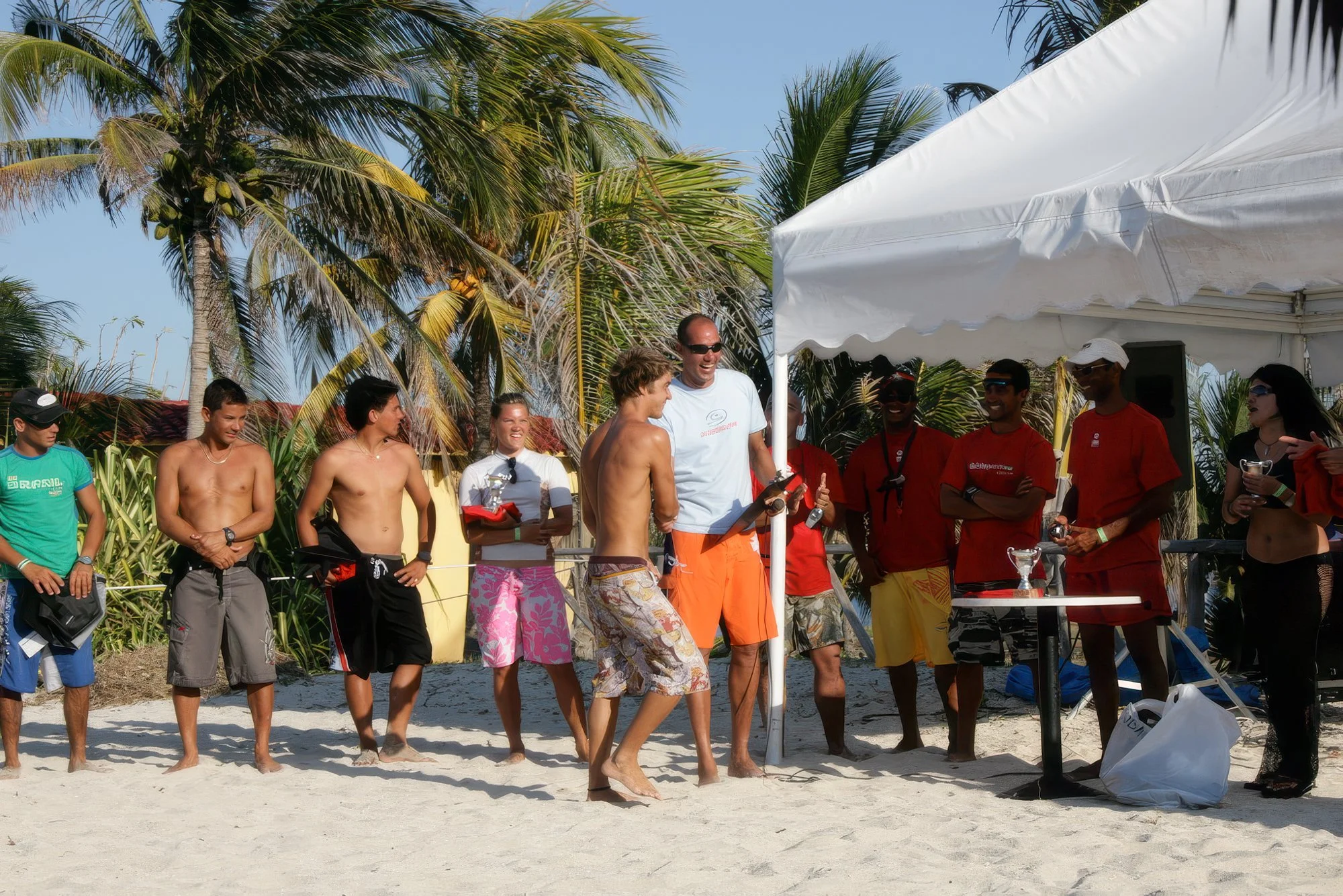
We started in 2006. And suddenly, everything began working. Customers arrived from Canada, Germany, France, Australia, Latvia – and of course, Estonia. We organized windsurfing trips with camper vans to places like Cayo Coco, always bringing the equipment along. We organized competitions as well. One of them became an international event, attracting windsurfers from all over Cuba.
The event became huge. So huge that it actually blocked traffic and caught the attention of Cuban officials: “What exactly is happening here?” That was not ideal. After all, we were supposed to remain somewhat “invisible”.
The Beginning of the End
Then came a group of Ukrainian and Russian windsurfers and kitesurfers. Most of them spoke neither Spanish nor English, so everywhere we went, they followed me around. They needed help ordering drinks at bars, getting into popular nightclubs, and communicating with locals. Later, another group joined them. They arrived in Varadero Marina on a luxurious two-masted yacht. Their real plan was to secretly transport Russians from Cuba to the United States.
At that time, Cuba had three things that were absolutely forbidden:
drugs,
human trafficking,
prostitution.
Of course, I knew nothing about their plans. I continued running my windsurf centre, completely unaware of what was happening around me. Then I started noticing strange changes at the hotel. The security guards changed. The biggest surprise was that suddenly all the cleaning staff had been replaced by young, fit, attractive women.
Something felt unusual. Later I discovered the truth: The “new staff” were actually members of the Cuban secret police. Their mission was to monitor my activities. The authorities suspected that the windsurfing club was only a cover for human trafficking — and that I was the person organizing the entire Ukrainian-Russian operation.
About a month later, a military truck arrived. They started loading my equipment. There was so much gear that only half of it fit onto the truck. The rest was left behind. I was taken to a detention facility near Varadero, apparently military-run. My passport was confiscated. I was placed in a cell.
The Investigation
The next morning, I was brought before a commission. Present were representatives from Gran Caribe management, police officials, and of course the “security guards and cleaners” — this time wearing military uniforms. A file as thick as a telephone book was placed on the table.
The investigation began. When the commission ended, they announced their conclusion: I was not involved in human trafficking. However, the situation had reached high-level officials, and they had discovered another problem: I was operating a windsurfing rental business without a Cuban state partner and without official permission. The order was simple: Stop all activities immediately. My passport was returned. I was told: “You can go.” The equipment that had been taken away was eventually returned. It was dirty, slightly damaged, and some small parts were missing — but most of it came back.
And that was the end of Cubawindsurf Club in the spring of 2007.
After Cuba
Some equipment was sold locally. Some was brought back to Estonia. Some was stolen. The final remaining sets disappeared under mysterious circumstances. Later, I returned to Cuba several times as an ordinary tourist. I slowly began to understand that the early signs of private entrepreneurship and openness were not developing in the direction many had hoped.
Today, Cuba faces even greater challenges. The strengthened US embargo has heavily affected tourism and contributed to shortages of fuel, electricity, and many basic necessities. The pandemic and hurricanes have also left their mark.
My friend Elian saw the future coming earlier than many others. He escaped from Varadero on a windsurf board and eventually made his way to Miami. You can read his incredible story here.
Viva Cubawindsurf!